Personal loans are unsecured credit options that usually require a high CIBIL score for approval. For salaried employees with a low credit score, obtaining funds can be challenging but is not impossible, especially with the rise of Fintech apps and NBFCs. These lenders often prioritize your income stability and repayment capacity over traditional credit history. While you might face higher interest rates or smaller loan amounts, a personal loan remains a viable solution for medical emergencies, weddings, or urgent expenses.


Understanding CIBIL Score in Personal Loan Approval
A CIBIL score is a three-digit number (ranging from 300 to 900) that summarizes an individual’s credit history and repayment behavior. It serves as a vital indicator of your creditworthiness and debt-handling capability.
The Role of CIBIL in Personal Loans
Because personal loans are unsecured and do not require collateral, lenders rely heavily on the CIBIL score to assess the risk of default. Its primary roles include:
- Approval Decision: It is often the first thing a lender checks to decide whether to approve or reject an application. A high score reflects good financial discipline and significantly boosts approval chances.
- Determining Interest Rates: Lenders use the score to set interest rates; a higher score usually qualifies a borrower for the most competitive, lower rates.
- Loan Terms: The score influences the sanctioned loan amount and the repayment tenure.
Ideal CIBIL Score for Personal Loans
While different financial institutions have varying risk appetites, they generally categorize scores as follows:
- 750 and Above (Excellent): This is considered the ideal range, ensuring easy approvals and the best possible pricing and terms.
- 700 to 749 (Good): Most traditional banks view 700 as a cut-off for approving unsecured personal loans.
- 650 to 699 (Satisfactory): This range is often the minimum requirement for many NBFCs and digital lenders.
- Below 600 (Poor): Scores in this range typically face rejections from traditional banks or fall into “risk pricing” territory, where lenders charge significantly higher interest rates to offset the high risk.
Despite these standards, some fintech apps may consider applicants with scores as low as 500 to 520 if they can demonstrate strong income stability and repayment capacity.
Also Read: Good Credit Score
Challenges of Getting a Personal Loan with a Low CIBIL Score
Obtaining a personal loan with a low CIBIL score is challenging because lenders perceive it as a sign of high credit risk, reflecting past payment delays or defaults.
- Limited Bank Options: Most traditional banks have a cut-off of 700 to 750 for unsecured loans; applications below this are often rejected.
- Narrowed Lender Choice: A poor score restricts you to NBFCs and Fintech lenders, who have higher risk appetites but different lending terms.
- Higher Interest Rates: Lenders use “risk pricing,” quoting significantly higher rates to compensate for the potential of non-payment.
- Lower Approved Amounts: To minimize financial exposure, lenders may sanction a much smaller amount than requested.
- Stricter Scrutiny: Low scores trigger intensive reviews of your income stability, bank statements, and employment history.
- Restrictive Loan Terms: Lenders often protect themselves with shorter repayment tenures, leading to higher monthly EMIs.
- Collateral or Guarantor Needs: While personal loans are typically unsecured, you may be required to provide collateral (gold/property) or a creditworthy co-applicant.
- Risk of Further Credit Damage: Applying to multiple lenders in a short time creates “hard inquiries,” which can further lower your score.
- Stricter Penalties: Borrowers with low scores often face harsher penalties and fees for missed payments or cheque bounces.
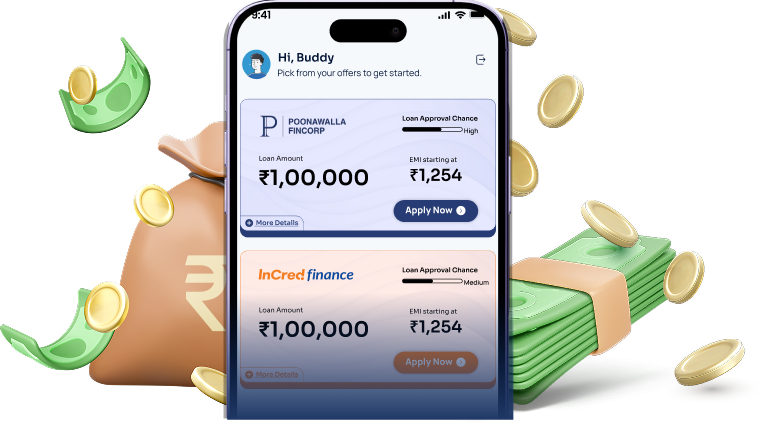
Loan Options for Salaried with Low CIBIL Score
While a high credit score is usually preferred, salaried individuals with low CIBIL scores still have multiple borrowing options. Many lenders today focus on income stability, employer profile, and cash flow rather than relying entirely on past credit history. Below are the key loan options explained in detail:
1. Bank Personal Loans (Strict but Possible)
- Banks generally require a score of 700–750
- Approval may still be possible if:
- You have a salary account with the bank
- You work in a government job, PSU, or reputed MNC
- Interest rates are lower compared to NBFCs, if approved
- Documentation and verification are more stringent
- Best suited for applicants with high income and job stability despite a low score
Also Read: Best Personal Loans for Salaried
2. Fintech and Digital Loan Apps (Fast & Flexible)
- Fintech loan apps offer loans with minimal or alternative credit checks
- Can approve loans for CIBIL scores as low as 500–520
- Evaluate:
- Salary credits
- Bank transactions
- Spending patterns
- Quick approval and instant disbursal (often within minutes)
- Ideal for urgent, small-ticket loans
- Usually come with higher interest rates and shorter tenures
3. NBFC Personal Loans (Balanced Option)
- NBFCs are more flexible than banks
- Typically accept CIBIL scores around 600–650, sometimes lower
- Offer:
- Pre-approved loans to existing customers
- Insta loans without fresh credit checks in some cases
- Provide higher loan amounts than apps
- Interest rates are moderate to high, depending on risk profile
- Best suited for mid-range salary earners with stable jobs
Also Read: NBFC Personal Loans
4. Secured Loan Alternatives (Lowest Risk Option)
- Loans backed by assets like:
- Gold (gold loans)
- Fixed deposits
- Property
- Approval is easier even with a very low CIBIL score
- Interest rates are lower than those of unsecured personal loans
- Loan amount depends on the value of collateral
- Risk: The asset can be seized if repayment fails
- Best option when unsecured loans are rejected
5. Peer-to-Peer (P2P) Lending (Alternative Channel)
- Platforms connect borrowers directly with individual investors
- More lenient eligibility criteria than banks
- Approval depends on:
- Income stability
- Risk profile
- Interest rates vary widely based on investor confidence
- Useful for borrowers facing multiple rejections from traditional lenders
Also Read: P2P Loans
6. Salary Advance & Payday Loans (Short-Term Option)
- Offered by fintech platforms for immediate cash needs
- Loan is typically repaid on the next salary date
- Features:
- Quick approval
- Minimal documentation
- Drawbacks:
- Very short tenure
- High effective interest cost
- Best for small, urgent expenses only
Also Read: Payday Loans

Key Factors That Improve Loan Approval Chances
Even with a low CIBIL score, you can enhance your personal loan eligibility by focusing on financial strengths that reassure lenders of your repayment capability.
- Choosing Fintech and Digital Loan Apps: Modern digital lenders and fintech platforms often prioritize income stability and repayment capacity over traditional credit history, making them more flexible for low-score applicants.
- Stable Monthly Salary: Having consistent, timely salary credits in your bank statement for at least 6 to 12 months signals lower repayment risk and reliability to the lender.
- Employer Reputation: Lenders favor applicants employed with reputed MNCs, listed companies, PSUs, or Government sectors, as these roles are perceived to have higher job security.
- Existing Relationship with the Bank: Holding a salary account, savings account, or fixed deposit with a bank allows you to negotiate for a loan based on established trust and positive transaction history.
- Applying for a Lower Loan Amount: Requesting a modest amount rather than the maximum eligibility reduces the lender’s risk perception and makes it easier for them to approve your request.
- Adding a Co-applicant or Guarantor: Involving a spouse or family member with a strong credit profile can offset your low score and provide the lender with an additional guarantee of repayment.
- Low Debt-to-Income Ratio: Demonstrating that your existing EMIs and credit card bills are low compared to your monthly income shows you have enough disposable cash flow to handle a new loan.
- Offering Collateral: Pledging assets like gold, property, or fixed deposits transforms an unsecured personal loan into a secured one, significantly lowering the risk for the lender.
- Clean Bank Statement Patterns: Maintaining a positive monthly balance and avoiding cheque bounces or irregular spending patterns improves your overall financial profile.
Eligibility Criteria for Low CIBIL Personal Loan
NBFCs and fintech platforms offer inclusive eligibility criteria to help salaried individuals with lower credit scores access funds when traditional banks may decline them. Here’s a structured overview:
| Criteria | Details |
| Age | Typically 21 to 60 years |
| Minimum Monthly Salary | ₹12,000 to ₹25,000 |
| Employment Stability | 6–12 months in current job and 1–3 years total work experience preferred |
| Employer Reputation | Higher approval chances for employees of MNCs, PSUs, and government organizations |
| Nationality | Must be an Indian citizen or resident |
| CIBIL Score Threshold | Ideal: 700+;
acceptable: 650+; Some fintech lenders may accept 500–520 |
| Debt-to-Income Ratio (FOIR) | Existing EMIs should ideally be within 30%–40% of monthly income |
Quick Insight: Even with a low CIBIL score, meeting strong salary, job stability, and low debt criteria can significantly improve your loan approval chances.
Also Read: Personal Loan for Low CIBIL Score
Interest Rates for Low CIBIL Personal Loans
Interest rates for personal loans are risk-sensitive, meaning salaried individuals with lower CIBIL scores are typically charged higher rates to offset the lender’s perceived risk of default. While those with excellent credit enjoy competitive pricing, applicants with scores below 650 often fall into a “risk-based” pricing bracket.
| Lender Category | Typical Interest Rate Range (p.a.) | Key Characteristics |
| Traditional Banks | 9.99% to 16% | Lowest rates usually require scores of 700–750+. |
| NBFCs | 10% to 30% | Moderate flexibility for scores around 650. |
| Fintech & Loan Apps | 12% to 56% | High flexibility; considers scores as low as 500–520. |
| No Credit Check Loans | 24% to 48%+ | Highest “risk pricing” due to lack of credit assessment. |
Risk-Based Interest Rate Structure
Lenders implement a risk-based pricing model to determine your specific interest rate. If a lender perceives you as a high-risk borrower due to a low CIBIL score (e.g., 550 to 600), they will charge a higher interest rate to compensate for the potential of non-payment. Conversely, applicants with a score of 750 or higher are viewed as low-risk and typically qualify for the lender’s lowest advertised rates.
Factors Affecting Personal Loan Interest Rates
Beyond your credit score, several other variables influence the final rate offered by a lender:
- CIBIL Score Thresholds: A score of 750+ qualifies for the best terms, while scores between 600 and 699 are considered “workable” but face higher pricing.
- Monthly Income Levels: Higher income levels signal a lower repayment risk, which can help in negotiating a better interest rate.
- Employer Profile: Employees of reputed MNCs, listed companies, or Government/PSU sectors often receive more favorable rates due to perceived job security.
- Debt-to-Income (DTI) Ratio: Lenders check your existing EMIs; a lower obligation profile (ideally EMIs under 30–40% of income) improves your eligibility for a lower rate.
- Existing Banking Relationship: Holding a salary account or having a positive history with a lender can lead to trust-based interest reductions.
- Loan Amount and Tenure: Requesting a very high amount with a low score increases risk, whereas smaller amounts or shorter tenures may be priced differently depending on the lender’s policy.
Documents Required for Salaried Applicants
To ensure a smooth and often digital application process, salaried individuals should keep the following documents ready to verify their identity, residency, and employment stability.
| Document Category | Required Documents |
| Identity Proof (KYC) | PAN Card (mandatory) and Aadhaar Card are primary requirements. Other options include a Passport, Voter ID, or Driving License. |
| Address Proof | Valid residential proof such as an Aadhaar Card, utility bills (electricity, piped gas, or phone), a property tax receipt, or a valid rental agreement. |
| Income Proof | Salary slips for the last 3 to 6 months. Lenders may also require the latest Form 16 or ITR (Income Tax Returns). |
| Bank Statements | Salary account bank statements for the previous 3 to 6 months. |
| Employment Evidence | An Employee ID card, offer letter, service certificate, or contract letter to confirm stability with your current employer. |
| Photographs | A real-time image (selfie) or passport-size photograph for identity verification. |
| Digital Verification | An Aadhaar-linked mobile number is essential for receiving OTPs and completing the digital KYC process. |
Strategies to Get a Personal Loan with a Low CIBIL Score
Securing a personal loan with a low CIBIL score is possible by emphasizing your current financial stability and repayment capacity to potential lenders.
- Negotiate with Your Existing Bank: Leverage established trust from a long-standing salary or savings account relationship to secure approval.
- Target NBFCs and Fintech Lenders: These platforms often prioritize income stability and bank cash flow over traditional credit scores.
- Request a Lower Loan Amount: Applying for a smaller amount reduces the lender’s risk perception, making approval more likely.
- Add a Co-applicant or Guarantor: Including someone with a strong credit profile can offset your low score and provide a repayment guarantee.
- Provide Collateral: Pledging assets like gold, property, or fixed deposits transforms the request into a secured loan, drastically lowering lender risk.
- Demonstrate Income Stability: Use consistent salary credits and additional income proofs to reassure lenders of your EMI handling capacity.
- Optimize Your Financial Profile: Correct credit report errors, maintain a low debt-to-income ratio, and avoid multiple concurrent applications to prevent further score damage from “hard inquiries”.
Personal Loan Options Without a High Credit Score
When traditional credit scoring becomes a barrier, salaried individuals can still access funds through alternative lending options. These options focus more on income, employment stability, and banking behavior rather than just credit history. Here’s a detailed breakdown:
1. Loans Based on Salary and Cash Flow
- Lenders like Airtel Finance and Olyv offer loans with minimal reliance on CIBIL score
- Approval is based on:
- Monthly salary credits
- Bank transaction history
- Spending patterns and cash flow
- Suitable for applicants with a steady income but poor credit history
- Faster processing due to reduced dependency on traditional credit checks
2. Pre-Approved Loan Offers for Existing Customers
- Offered to customers with existing relationships (salary account, FD, or previous loans)
- Example: Pre-approved offers from lenders like Bajaj Finserv
- Key benefits:
- Minimal documentation
- Faster approval and disbursal
- Lower reliance on the current CIBIL score
- Based on past repayment behavior and account activity
3. Pre-Approved Loan Offers with Pre-assigned Limits
- Digital platforms provide instant loan limits even to new users
- Loan limits can go up to ₹5 lakh or more, depending on the profile
- Based on alternative data such as:
- Income level
- Employment details
- Digital financial behavior
- Offers instant access to funds without manual credit evaluation
4. NBFC and Fintech Digital Loans
- NBFCs and apps like Jupiter, Fibe, and PaySense specialize in low or no-credit-score loans
- Features:
- Digital KYC and paperless process
- Faster approvals (often same-day)
- Flexible eligibility criteria
- Consider applicants with low or even no credit history
- Interest rates may be higher compared to traditional loans
5. Secured Personal Loans
- Requires pledging assets such as:
- Gold
- Fixed deposits
- Property
- Benefits:
- Easier approval even with a very low CIBIL score
- Lower interest rates compared to unsecured loans
- Loan amount depends on the value of collateral
- Risk: The asset may be seized in case of default
6. Peer-to-Peer (P2P) Lending
- Online platforms connect borrowers directly with individual investors
- More lenient eligibility criteria than traditional lenders
- Loan amount: Typically up to ₹5 lakh
- Approval depends on:
- Income stability
- Risk profile
- Useful for those facing repeated loan rejections
7. Salary Advance and Payday Loans
- Short-term loans based on monthly salary
- Features:
- Quick approval and disbursal
- Minimal documentation
- Repayment is usually due on the next payday
- Drawbacks:
- Very short tenure
- Higher effective interest cost
- Best suited for urgent, small financial needs
Salary-Based Loan Eligibility for Low CIBIL
Even with a low CIBIL score, your monthly salary plays a crucial role in determining loan eligibility. Lenders, especially NBFCs and fintech platforms, focus heavily on income stability and repayment capacity when approving loans for salaried individuals with poor credit history. Higher salaries improve approval chances, increase loan limits, and may even help negotiate better terms despite a low score.
₹10,000 to ₹15,000 Salary Range
- Loan Amount: ₹50,000 – ₹1.5 lakh
- Lenders: Mostly loan apps and select NBFCs
- Approval Chances: Low to moderate
- Interest Rates: Higher (18% – 36%)
- Key Conditions:
- A stable monthly salary is essential
- Minimal existing EMIs preferred
- Short-term loans are more common
- Best Option: Instant loan apps or small-ticket NBFC loans
₹15,000 to ₹25,000 Salary Range
- Loan Amount: ₹1 lakh – ₹5 lakh
- Lenders: NBFCs and fintech apps
- Approval Chances: Moderate
- Interest Rates: 14% – 28%
- Key Conditions:
- Minimum 6–12 months of job stability
- Salary credited to bank account
- A credit score may be overlooked if income is consistent
- Best Option: NBFC personal loans and hybrid digital lenders
₹25,000+ Salary Range
- Loan Amount: ₹5 lakh – ₹20 lakh+
- Lenders: Banks and NBFCs
- Approval Chances: High (even with low CIBIL)
- Interest Rates: 11% – 22% (depending on profile)
- Key Conditions:
- Strong employer profile (MNC/govt preferred)
- Low FOIR (debt-to-income ratio)
- Possibility of pre-approved offers
- Best Option: Mix of banks and NBFCs for better rates and higher loan limits
Comparison of Banks, NBFCs, and Loan Apps
When seeking a personal loan with a low credit score, choosing the right lender type is critical, as their approval thresholds, interest costs, and processing speeds vary significantly based on their risk appetite.
| Parameter | Banks | NBFCs | Loan Apps |
| Approval Chance | Low (Score below 700 is often rejected) | Moderate (Accept scores around 650) | High (Evaluate income stability over score) |
| Interest Rate | Low (Typically 9.99% to 16% p.a.) | Moderate (Ranges from 10% to 30% p.a.) | High (Can reach 35% to 56% p.a.) |
| Processing Time | Medium (Moderate compared to digital options) | Fast (Disbursal often within 24 hours) | Instant (Approval and funds in minutes) |
| Eligibility Flexibility | Low (Strict focus on CIBIL and salary history) | Medium (Focus on overall profile and stability) | High (Minimal documentation; uses alternative data) |
Ways to Improve CIBIL Score Before Applying
While several lenders offer loans for low scores, improving your credit profile before applying can help you secure better interest rates and higher loan amounts.
- Make Timely Repayments: Always pay your EMIs and credit card bills on or before the due date, as payment history is the most critical factor in your score.
- Limit Credit Utilization: Try to keep your credit card usage below 30% of your total available limit to demonstrate disciplined borrowing.
- Avoid Multiple Applications: Submitting several loan requests in a short period creates multiple “hard inquiries,” which can drag your score down further.
- Check and Correct Report Errors: Regularly review your credit report for inaccuracies or outdated information and raise disputes with the bureau to have them rectified.
- Maintain a Healthy Credit Mix: A balanced portfolio of secured (e.g., home loans) and unsecured loans (e.g., personal loans) positively impacts your credit health.
- Keep Old Accounts Open: Avoid closing old credit accounts unnecessarily, as the length of your credit history contributes to a higher score.
Steps to Apply for a Personal Loan with Low CIBIL
The application process for low CIBIL loans is typically digital, paperless, and streamlined through modern Fintech apps and NBFC platforms.
- Download the App or Visit the Website: Start by downloading the lender’s official mobile application or visiting their website.
- Register and Verify: Use your Aadhaar-linked mobile number to register and verify your profile via an OTP.
- Check Eligibility: Enter basic personal, employment, and income details to view your pre-approved loan offer or eligibility limit.
- Select Loan Terms: Choose the required loan amount and a repayment tenure that fits your monthly budget.
- Complete Digital KYC: Upload digital copies of your PAN card, Aadhaar, and a real-time selfie for identity verification.
- Set Up Auto-Debit: Configure an e-mandate (UPI or eNACH) to automate your EMI repayments from your salary account.
- Verification and Disbursal: Once verified, funds are typically disbursed directly into your bank account within minutes to 24 hours.
Limitations of Low CIBIL Personal Loans
Borrowing with a poor credit score involves several trade-offs, as lenders implement strict terms to mitigate their financial risk.
- Higher Interest Rates: Lenders often use “risk pricing,” quoting significantly higher rates, sometimes ranging from 15% to 54% p.a., compared to standard loans.
- Reduced Sanctioned Amounts: You may receive a much smaller loan amount than requested to minimize the lender’s exposure.
- Shorter Repayment Tenures: Lenders may restrict the tenure, leading to higher monthly EMIs that can strain your cash flow.
- Stricter Scrutiny: Expect an intensive review of your income stability, bank statements, and employer reputation.
- Collateral Requirements: Some lenders may only approve your request if you provide collateral like gold or fixed deposits, or include a creditworthy co-applicant.
- Steep Fees and Penalties: Low CIBIL loans may carry higher processing fees and stricter penalties for any missed payments.
Summary & Key Insights
Securing a personal loan with a low CIBIL score is achievable by targeting Fintech apps and NBFCs that prioritize income stability over historical credit data. While these loans provide vital access to funds during emergencies, they carry limitations such as high interest rates and shorter tenures. To improve approval odds, salaried applicants should request smaller amounts or include a co-applicant. Ultimately, these loans serve as a financial bridge and an opportunity to rebuild your credit score through consistent, timely repayments.
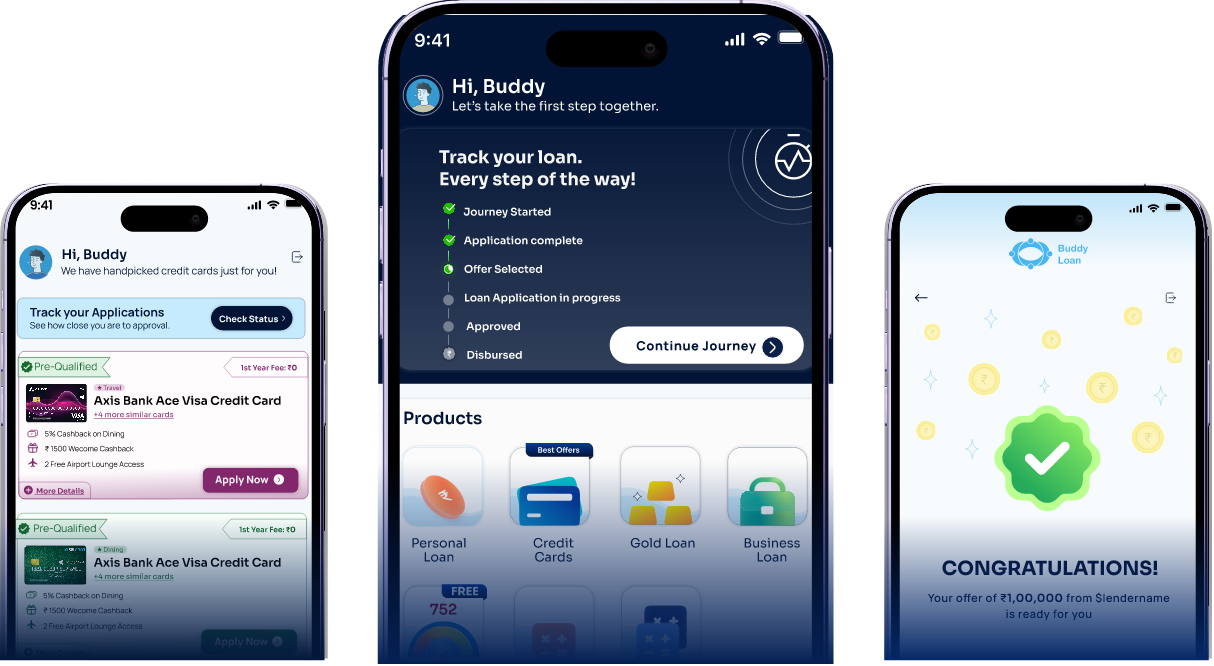
Download the Buddy Loan App Now!
One solution to each of your financial needs at your fingertip.

Scan to download now