Loans for Scheduled Caste are a type of financial assistance offered to individuals belonging to the Scheduled Caste community in India. These loan schemes for SC and ST are designed to provide support and opportunities for economic and social development within the community.


Interest Rates For Scheduled Caste
The government often provides loans for Scheduled Castes with subsidised interest rates starting as low as 1.00% per annum. This is part of the efforts to make loans more accessible and affordable for Scheduled Castes, helping the historically disadvantaged community achieve economic empowerment.
Interest rates can vary for different categories of loans like education, business, or home loans for scheduled castes and schemes like the NSFDC scheme for SC, and Stand-Up India Scheme.
Eligibility Criteria for Scheduled Caste Loans
The eligibility criteria for Scheduled Caste (SC) loans in India can vary depending on the specific loan scheme one is interested in. However, some general criteria that apply to most schemes are given as follows:
- The most important criterion is that the borrower must belong to the Scheduled Caste community.
- The minimum age requirement is usually 18 years.
- Some schemes have income limits for eligibility. For example, the NSFDC Micro Credit Finance Scheme requires an income of less than Rs. 3 lakh p.a.
In addition to the above, here are some specific examples of eligibility criteria for popular SC loan schemes:
NSFDC Micro Credit Finance Scheme Eligibility
- Must be a member of the Scheduled Caste community.
- Age ranges between 18 and 65 years.
- Annual family income must be less than Rs. 3 lakh.
- Must be a resident of India.
NSFDC Education Loan Scheme Eligibility
- Must belong to the Scheduled Caste community.
- Must be enrolled in a full-time professional/technical course recognized by the Government of India.
- Minimum age limit is 18 years.
- Must be a resident of India.
Stand-Up India Scheme Eligibility
- Must be a woman entrepreneur belonging to the SC, ST, or OBC community.
- The age should be between 18 and 40 years.
- Should not own more than 50% stake in any existing business venture.
- Must be a resident of India.
Pradhan Mantri Awas Yojana (PMAY) Eligibility
- Must belong to the SC/ST community.
- Living in an urban area.
- Annual family income below Rs. 12 lakh.
Note: In addition to financial support, many of these programs also offer guidance and training to help borrowers make the most of their loans and achieve their goals.
Documents Required For Scheduled Caste Loan
The borrower of Scheduled Caste Loans needs to submit several documents to ensure a smooth loan application procedure. Although the required documents may vary based on the various loan schemes, the following are some of the common documents that one must keep ready to avail a Scheduled Caste loan.
- Aadhar card for identity proof
- A valid Caste certificate of SC/ST
- Income certificate for income proof
- Bank account statement (if asked)
- Duly filled application form
- Passport size photographs
Comparing Scheduled Caste Loan Providers
Learn about the wide range of loan schemes for the SC community, offering varied loan amounts, interest rates and subsidies. Make a comprehensive comparison among these Scheduled Caste loan providers and loan schemes and choose the best option for your needs.
| Scheme Name | Provider | Loan Amount | Interest Rate (% p.a.) |
|---|---|---|---|
| NSFDC Micro Credit Finance Scheme | National Scheduled Castes Finance & Development Corporation (NSFDC) | Up to 50,000 | 2% – 5% |
| Stand-Up India Scheme | Various banks and Non-Banking Financial Companies (NBFCs) | Up to 1 crore | Varies by lender |
| NSFDC Education Loan Scheme | NSFDC | Up to 100% of the course fee + living expenses | Variable (based on loan amount) |
| Pradhan Mantri Awas Yojana (PMAY-Urban) | Ministry of Housing and Urban Affairs | Up to 6 lakhs (subsidy amount varies) | Varies by income category |
| Dr. B.R. Ambedkar Development Corporation Limited (BADCL) Self Employment Scheme | BADCL | Up to 1 lakh | 2% – 5% |
| National Safai Karamcharis Finance & Development Corporation (NSKFDC) Education Loan | NSKFDC | Up to 100% of the course fee + living expenses | Variable (based on loan amount) |
| PMMY (Ujjwala) | Ministry of Petroleum and Natural Gas | Up to 8,000 (LPG connection) | 0% |
*Note- The interest rates, loan amounts, and other details may vary depending on the specific scheme, lender, and borrower profile. Check the scheme’s official website for accurate information.
Types of Loans for Scheduled Caste Individuals
There are a variety of loan schemes available for Scheduled Caste (SC) individuals in India, designed to promote their economic and social development. These loans cater to various needs, including education, entrepreneurship, agriculture, and housing. Here are some of the major types of SC loans available:
Education Loans
- National Scheduled Castes Finance and Development Corporation (NSFDC) Education Loan Scheme: This NSFDC scheme for SC provides financial assistance to SC students pursuing full-time professional/technical courses. The loan amount can cover up to 100% of the course fee and living expenses.
- National Safai Karamcharis Finance & Development Corporation (NSKFDC) Education Loan: This scheme is specifically for students from the Safai Karamchari community pursuing higher education. The loan amount can cover up to 100% of the course fee and living expenses.
Entrepreneurship Loans
- Stand-Up India Scheme: This scheme provides loans up to Rs. 1 crore to women entrepreneurs belonging to SC, ST, and Other Backward Classes (OBC) communities. The loan can be used for setting up or expanding a greenfield enterprise.
- NSFDC Micro Credit Finance Scheme: This scheme provides loans up to Rs. 50,000 to SC individuals for income-generating activities. The loan has a simple interest rate of 5% per annum and a repayment period of 3 years.
Agriculture Loans
- NSFDC Farmer’s Loan Scheme: NSFDC Farmer’s Loan is one among the agricultural loans. This scheme provides loans to SC farmers for various agricultural purposes, such as the purchase of land, livestock, and agricultural equipment. The loan amount can be up to Rs. 30 lakh and the interest rate is 7.00% per annum.
Housing Loans
- Pradhan Mantri Awas Yojana (PMAY): This is a home loan scheme for Scheduled Caste families living in urban areas. It provides subsidies on housing loans based on the loan amount and the income of the borrower.
Looking for a personal or business loan?
Caclulate EMI for Your Loan
You can use an online EMI calculator to estimate your Scheduled Caste loan EMI. Just enter the right interest rate, loan amount, and loan tenure to get accurate results.
Try the Buddy Loan EMI calculator given below to calculate your Scheduled Caste loan EMI.
Calculate your EMI now!
Your Amortization Schedule (Yearly/Monthly)
Selecting the Ideal Loan for Your NeedsSelecting the Ideal Loan for Your Needs
You need to carefully consider various factors before selecting the ideal Scheduled Caste (SC) loan for your needs. Here are some steps and tips to help you choose the right loan:
- Understand Your Needs: Whether it’s for education, housing, starting a business, or any other specific reason, understanding your needs will guide you in selecting the most suitable loan.
- Research Available Loan Programs: Explore the different loan programs offered by banks, financial institutions, and government agencies. Look for schemes specifically designed for Scheduled Castes, as these offer more favorable terms and conditions.
- Compare Interest Rates: Compare the interest rates of various loan options. Lower interest rates can significantly impact the overall cost of the loan. Choose the one that aligns with your preferences and financial goals.
- Check Eligibility Criteria: Check the eligibility criteria for each loan program. Ensure that you meet the requirements regarding income, credit score, collateral, and other factors. Choose a loan for which you are most likely to qualify.
- Loan Amount and Repayment Terms: Assess the loan amount offered by different programs and ensure it aligns with your financial needs. Additionally, consider the repayment terms, including the tenure and the flexibility of repayment options.
- Security or Collateral Requirements: Some loans may require collateral, while others may be unsecured. Evaluate your ability to provide the necessary security or collateral. If you are uncomfortable with providing collateral, opt for an unsecured loan if available.
- Government Schemes and Subsidies: Check all the government schemes or subsidies available for Scheduled Castes. These programs may offer financial assistance, lower interest rates, or other benefits. Familiarise yourself with the details and take advantage of such opportunities.
- Hidden charges: Read the terms and conditions carefully to understand any hidden charges or fees associated with the loan. Be aware of processing fees, prepayment penalties, and any other costs that may apply.
- Documentation and Legal Aspects: Ensure that you have all the necessary documentation including the caste certificate in order. Understand the legal aspects of the loan agreement, and seek clarification on any terms that may be unclear.
Steps to Apply for a Scheduled Caste Loan
The steps to apply for a Schedule Caste Loan vary depending on the chosen scheme or the banks of NBFCs that are offering those loans. However, the following are some of the common steps that you might need to follow to apply for a Scheduled Caste Loan.
- Download the form online or visit the bank/NBFC/concerned Government Office.
- Duly fill out the form with all the required information.
- Submit the form along with the required documents and passport-size photographs.
- Submit a valid caste certificate and income certificate.
- Post submission, wait for approval and disbursement of the loan amount.
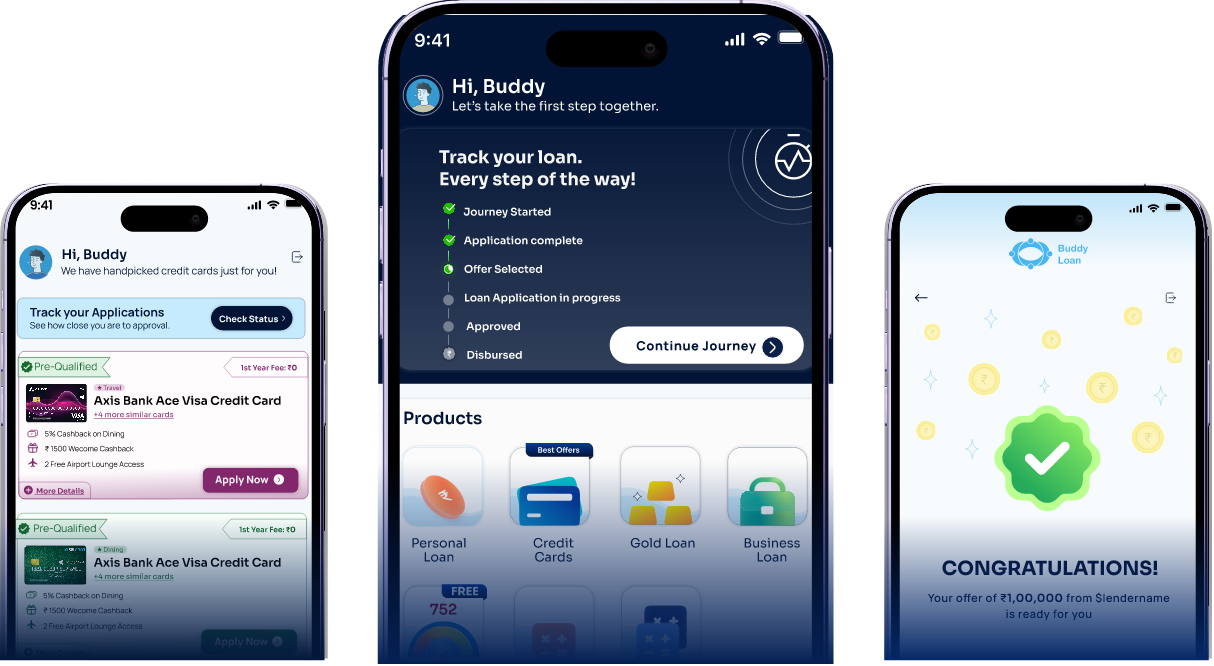
Download the Buddy Loan App Now!
One solution to each of your financial needs at your fingertip.

Scan to download now