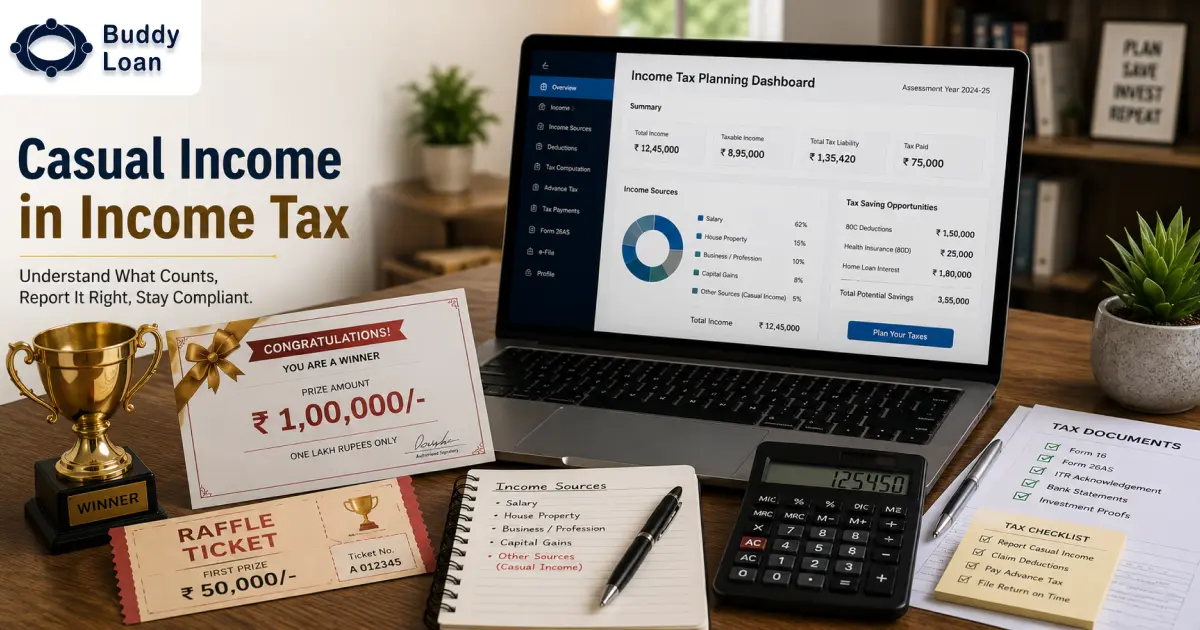
Ever wondered why your ₹1 lakh lottery win doesn’t actually mean you can take home the full amount?
It is because such gains are taxed as casual income under the Income Tax Act. This category covers earnings that are unexpected and non-recurring, like winnings from lotteries, game shows, gambling, and similar sources. According to Section 115BB, casual income is taxed at a flat 30% rate, without any deductions.
Understanding how this income is treated ensures accurate tax reporting. Read more to know the role of tax in casual income.

What Is Casual Income & Why Is It Taxed Differently
Casual income refers to earnings that are irregular, unexpected, and not part of your professional or business income. It includes windfall gains, such as lottery prizes, game show rewards, and winnings from gambling or betting. Since these earnings are not tied to any contractual work or recurring effort, they are taxed differently to prevent misuse and ensure accountability.
Under Section 115BB of the Income Tax Act, such income is taxed at a flat rate of 30% (including cess*), regardless of your overall income bracket. This is meant to discourage unregulated earnings from gambling-like activities and ensure that all gains, even those from lucky outcomes, are taxed fairly.
*An additional tax applied by the government to be used for a specific purpose, such as health, education, etc.
What Qualifies As Casual Income? Know the Key Examples
The following are treated as casual income if received occasionally:
- Winnings from lotteries, game shows, or TV quiz contests
- Prizes from betting, gambling, or horse racing
- Payouts from online fantasy platforms like Dream11 (if earned irregularly)
- Puzzle or crossword contest winnings
- One-time poker or card game profits
Note: Salary incentives, professional contest winnings (if related to the profession), and capital gains are not casual income.
How Is Casual Income Taxed in India?
Casual income is taxed under the head ‘Income from Other Sources’ at a flat rate of 30%. With cess added, the effective rate becomes 31.2%, applicable from the first rupee earned. Importantly:
- No deductions are allowed, not even expenses incurred to earn the income (like buying a lottery ticket).
- You cannot set off losses from other sources (e.g., business or capital loss) against casual income.
- Even if your total income is below the basic exemption limit (₹2.5 lakh), casual income is still taxed at the flat rate.
TDS On Casual Income: When & How It Is Deducted
If the value of your winnings exceeds ₹10,000, the payer (TV show, gaming platform, etc.) is required to deduct TDS at 30% under:
- Section 194B for lotteries, crossword puzzles, game shows, and contests
- Section 194BB for horse race winnings

What Happens If You Don’t Declare Casual Income?
Failing to declare casual income can lead to:
- Scrutiny from the Income Tax Department
- Penalties for under-reporting income
- Interest on unpaid taxes
Since most high-value winnings involve TDS, the tax department can easily trace the income through Form 26AS and cross-verification. Transparency is the best policy.
Hence, you must report all casual income in your Income Tax Return (ITR) under the head ‘Income from Other Sources.’ Depending on your income structure, use:
- ITR-1: If your casual income is the only non-salary component
- ITR-2 or ITR-3: For more complex cases with capital gains, business income, etc.
Ensure you:
- Mention gross winnings, not the net amount received
- Claim credit for TDS deducted, using Form 26AS or the TDS certificate
Suggested Read: Best Tax-Saving Investments Under Section 80c
Conclusion
While a sudden win may bring momentary joy, it comes with long-term tax obligations. Casual income is taxed heavily and must be disclosed accurately in your ITR.
Ensure to stay informed, keep documentation, and seek guidance from a tax professional to prevent any unexpected tax liabilities.
Download the Buddy Loan App Now!
One solution to each of your financial needs at your fingertip.

Scan to download now