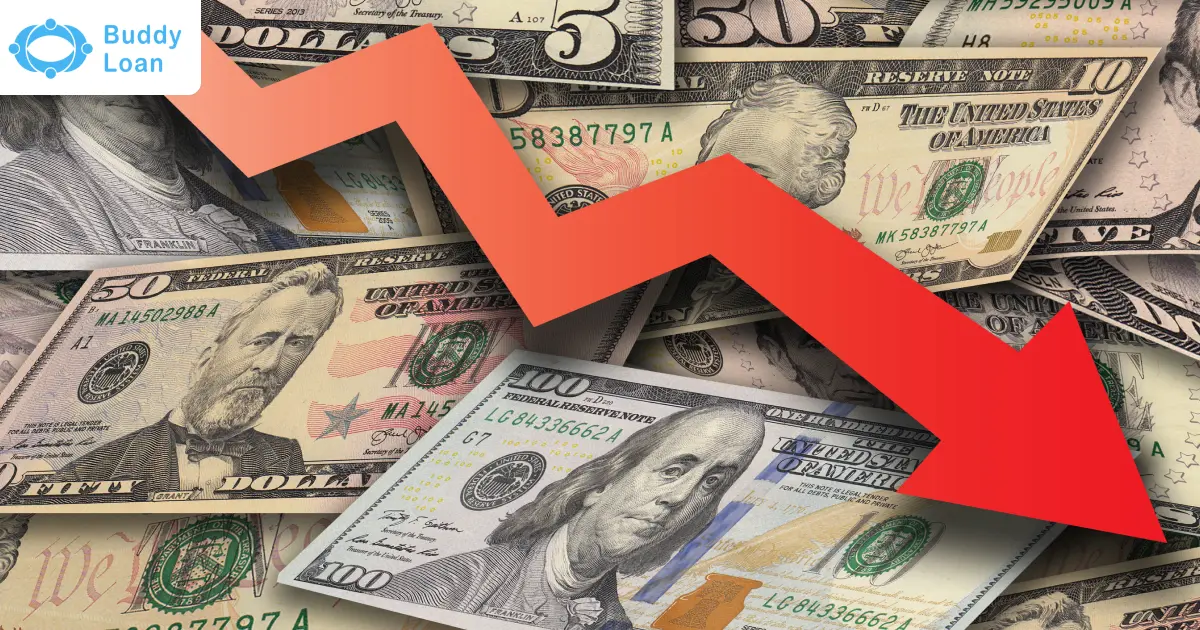
The global financial markets are witnessing a tectonic shift. For the first time in four years, the US Dollar Drops significantly against a basket of major currencies, sending ripples through emerging markets like India. The Dollar Index (DXY) is the metric that measures the greenback’s strength against peers like the Euro and Yen and now has breached critical support levels, signalling a potential end to the era of the “King Dollar”.
For the average observer, currency charts might look like noise. But for the Indian investor, the movement of USD/INR determines everything from the price of petrol at the pump to the value of your IT sector mutual funds. When the world’s reserve currency catches a cold, the rest of the market reacts with a fever or, in this case, a rally in alternative assets.
Let’s take a quick and deep look at why there is a drop in US dollar value and what is changing, the mechanics behind it, and the critical correlation between a weak dollar and rising gold prices.
Why the US Dollar Value is Falling
The drop of the American dollar value is rarely about India; it is almost always about the United States. The primary driver behind the current 4-year low is the Federal Reserve’s pivot on interest rates.
When US interest rates are high, global investors flock to American bonds to earn safe yields, driving up demand for the dollar. However, as the Fed begins to cut rates to prevent a recession, that yield advantage disappears. Capital flows out of the US and into riskier markets or hard assets.
- The DXY Factor: The DX index acts as a thermometer for the US economy. A drop to a 4-year low suggests that investors are betting on a slowing US economy compared to the rest of the world.
- De-Dollarisation: There is also a structural undertone. As central banks globally reduce their reliance on US Treasury bonds, the structural demand for the USD softens over time.

US Dollar Drop Impact on India
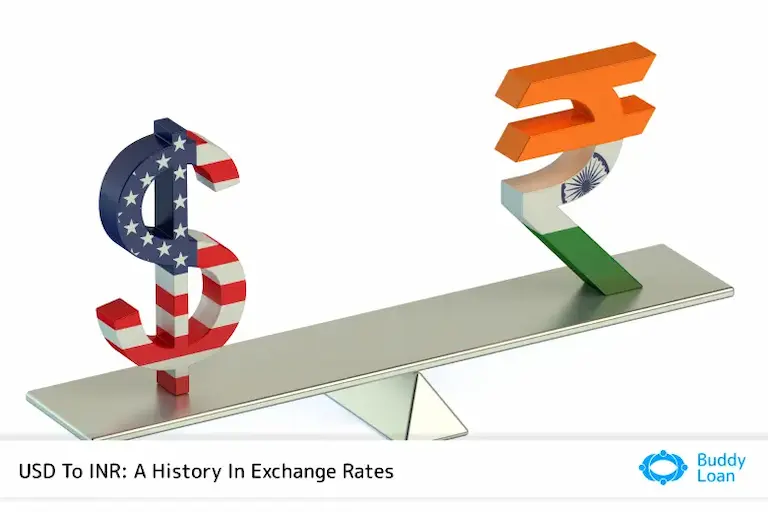
When the US Dollar Drops, the immediate reaction is seen in the USD to INR exchange rate. A weaker dollar typically allows the Indian Rupee to breathe and appreciate (gain value).
Imports Become Cheaper: India imports over 80% of its crude oil. A falling USD/INR rate means India pays fewer rupees for the same barrel of oil. This can help lower domestic inflation and reduce the Current Account Deficit (CAD).
Foreign Flows (FIIs): A peaking dollar often triggers a ‘Risk On’ sentiment. Foreign Institutional Investors (FIIs) tend to move money out of US cash positions and into emerging equity markets like India, potentially boosting the Nifty and Sensex.
Exporters could feel a pinch or a punch. It’s not all good news. Indian IT and Pharma companies earn their revenue in USD. When they convert those earnings into Indian Rupees at a lower rate, their profit margins on paper shrink.
Also Read: Impact of US Dollars & Other Currency on Gold Price
Low Dollar and Gold Price Relation
Perhaps the most critical correlation for investors to understand is the inverse relationship between the US Dollar and Gold. They are the two heavyweights on opposite ends of a seesaw.
- The Pricing Mechanism: Gold is traded globally in US Dollars. When the US Dollar Drops, it takes more dollars to buy the same ounce of gold. Mathematically, the price of gold rises.
- The Safe Haven Pivot: When the dollar weakens due to economic fear or debt concerns, investors lose faith in fiat currency. They rush toward ‘hard assets’ that cannot be printed.
Specialists are predicting a possible hike in the gold rate for the next 5 years in India.
US Dollar Drop & Average Indian Investor
For Indian buyers, a weak dollar is a double-edged sword.
Scenario A: If the global gold price jumps 10% because the dollar fell, but the USD to INR rate creates a discount, the domestic price rise might be cushioned.
Scenario B: If the dollar falls due to a US crisis, gold usually rallies harder than the currency adjustment, leading to net gains for gold holders.
Conclusion
The news that the US Dollar Drops to a multi-year low is a signal of a changing economic cycle. The years of aggressive US rate hikes are in the rearview mirror, paving the way for a softer greenback. For the Indian economy, a stable or softening USD to INR is generally positive for inflation control, though it challenges our export sectors.
For the individual investor, this environment highlights the importance of diversification. As the dollar index cools, assets like Gold and emerging market equities often heat up. Watching the USD/INR chart is no longer just for forex traders; it is essential for anyone protecting their portfolio’s purchasing power.

Download the Buddy Loan App Now!
One solution to each of your financial needs at your fingertip.

Scan to download now