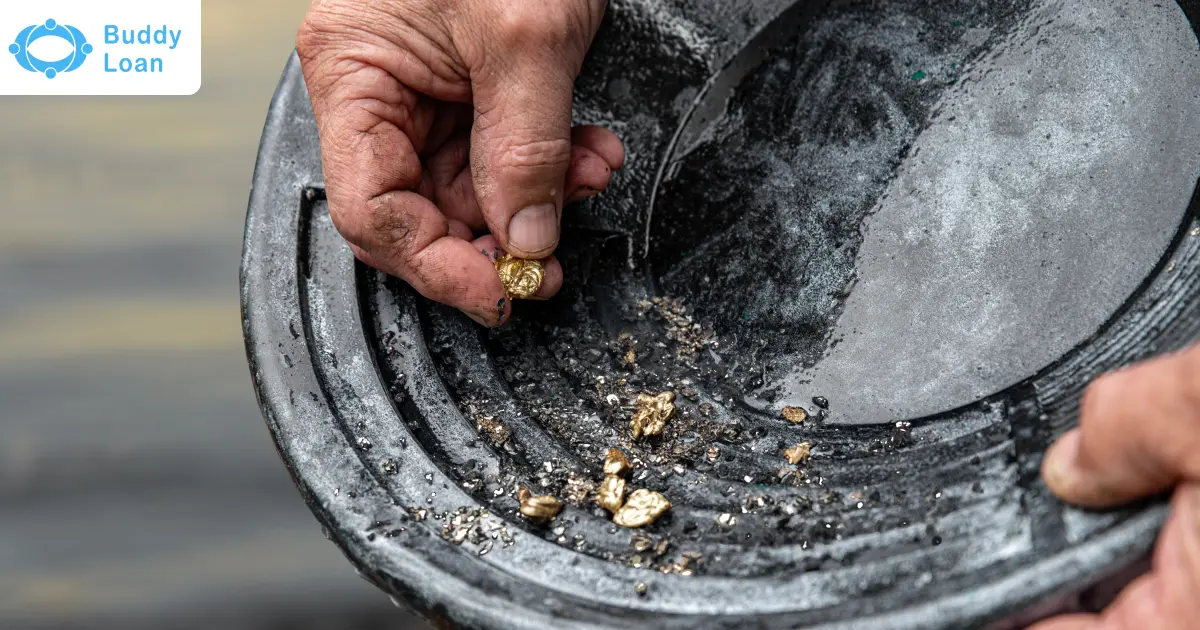
The era of ‘easy gold’ is officially over. The days when prospectors could stumble upon nuggets in a riverbed are history. Today, the future of the global gold supply lies buried deep underground, often in politically complex or geologically difficult regions. The focus has shifted from current production to unmined gold deposits—the future bank accounts of the mining industry.
These deposits are the ‘potential energy’ of the market. They represent ounces that have been identified by geologists but not yet extracted due to cost, technology, or regulation. Understanding where the largest unmined gold deposits by country are located provides a roadmap for future supply shocks and mining investment cycles.
Read for a detailed analysis of the nations holding the world’s untapped fortunes so that you know where to allocate your investment plans.
Global Ranking of Unmined Gold Reserves
This table aggregates data on “identified resources”—gold that is known to exist but is still in the ground. This includes both “reserves” (economically viable now) and “resources” (potential for the future).
| Rank | Country | Unmined Gold (Million Ounces) | Share of Global Total | Key Project / Insight |
| 1 | Russia | ~165.0 | 12.5% | Home to Sukhoy Log, the world’s largest undeveloped gold field. |
| 2 | Canada | ~148.0 | 11.2% | The KSM Project in BC is massive, but requires high capital to build. |
| 3 | United States | ~135.0 | 10.2% | Dominated by the Pebble and Donlin projects in Alaska (high regulatory risk). |
| 4 | Peru | ~110.0 | 8.3% | Huge copper-gold porphyry systems like Conga (currently stalled). |
| 5 | Australia | ~95.0 | 7.2% | Reserves are depleting faster than they are being replaced; there is a heavy focus on brownfield expansion. |
| 6 | Chile | ~85.0 | 6.4% | The Pascua-Lama project straddles the border but faces environmental blocks. |
| 7 | China | ~75.0 | 5.7% | Domestic data is opaque, with a heavy focus on deep-sea and deep-earth exploration. |
| 8 | Indonesia | ~65.0 | 4.9% | Grasberg still holds massive deep reserves; the Hu’u project is a rising giant. |
| 9 | South Africa | ~60.0 | 4.5% | Vast resources exist but are too deep (3 km+) to be mined profitably at current prices. |
| 10 | Mexico | ~55.0 | 4.1% | Focus shifting from silver to gold-rich polymetallic deposits. |
| 11 | Papua New Guinea | ~50.0 | 3.8% | Wafi-Golpu is a world-class deposit awaiting final permitting. |
| 12 | Brazil | ~45.0 | 3.4% | The Amazon region holds vast untapped alluvial and hard-rock potential. |
| 13 | Ecuador | ~35.0 | 2.6% | Cascabel is one of the most exciting new discoveries of the last decade. |
| 14 | Pakistan | ~30.0 | 2.3% | Reko Diq is a massive copper-gold tier 1 asset currently being developed by Barrick. |
| 15 | Turkey | ~25.0 | 1.9% | Rapidly modernising sector with projects like Copler expanding. |

Russia Holds the Largest Unmined Gold Reserves
Russia sits atop the global leaderboard for unmined gold deposits, primarily due to one specific asset: Sukhoy Log in Siberia.
- The Crown Jewel: Sukhoy Log (meaning “Dry Gully”) is often cited as the largest undeveloped gold deposit in the world. It contains an estimated 40+ million ounces of gold alone.
- Strategic Control: Unlike Western projects owned by public shareholders, this asset is tightly controlled by Polyus, Russia’s largest miner.
- Infrastructure Challenge: The deposit is located in a remote corner of the Irkutsk region. Developing it requires building roads, power grids, and an airport from scratch, which has delayed its production for decades.
Also Read: Highest Gold Producing Countries
Canada and the Golden Triangle
Canada ranks second, driven by the geological phenomenon known as the “Golden Triangle” in British Columbia.
- The KSM Project: Owned by Seabridge Gold, the Kerr-Sulphurets-Mitchell (KSM) project is a behemoth. It holds immense reserves of gold and copper. However, it is located in rugged, glaciated terrain.
- The Economics: While Canada has the gold, getting it out is expensive. These unmined gold reserves are often ‘low grade’, meaning you have to process tonnes of rock to get a gram of gold. This makes these projects highly sensitive to the price of gold. If gold drops below $1,800/oz, these mines might stay closed.
The United States and Alaska
The United States holds massive untapped gold resources, but they are trapped in a web of environmental politics.
- Pebble Mine (Alaska): This is arguably the most controversial mining project in history. Geologically, it is a monster, containing huge amounts of gold, copper, and molybdenum. However, it sits near the Bristol Bay watershed, the world’s largest sockeye salmon fishery.
- Donlin Gold: Another massive Alaskan project. It has high-grade ore but is so remote that the company needs to build a 300-mile natural gas pipeline just to power the mine.
- Insight: The US proves that having gold isn’t enough. You need the “Social Licence to Operate”.
Also Read: Top 20 Countries with Most Gold Reserves
Emerging Giants in Pakistan and Ecuador
Investors looking for growth often look past the “Big Three” to emerging jurisdictions where new, high-grade discoveries are being made.
- Pakistan (Reko Diq): For years, this project was stalled in international courts. Recently, a deal was struck with Barrick Gold to restart it. Reko Diq is a “Tier 1” asset, meaning it has a life of 40+ years and low operating costs. It is a game-changer for Pakistan’s economy.
- Ecuador (Cascabel): Historically an oil nation, Ecuador is emerging as a mining powerhouse. The Cascabel project is a deep underground deposit that experts believe could rival the biggest mines in Chile.

Why Some Gold Deposits Remain Unmined
If we know where the gold is, why aren’t we mining it? This is the “viability gap”.
- Grade vs. Depth: South Africa has millions of ounces, but they are 4 kilometres underground. The cost to cool the air and hoist the rock makes it unprofitable.
- CapEx Inflation: Building a new mine in 2026 costs billions. With inflation driving up the price of steel, cement, and labour, many future gold mining countries are waiting for gold prices to rise further before breaking ground.
- ESG Constraints: Environmental, Social, and Governance (ESG) rules mean that deposits in sensitive ecological zones (like the Amazon or Alaska) may never be mined, regardless of how much gold is there.
Investment Perspective on Undeveloped Reserves
For the investor, unmined gold deposits represent ‘option value’.
- The Junior Miners: Small companies often own the rights to these deposits. They don’t have the money to build the mine, so they drill to prove the reserves and hope a major company (like Newmont or Barrick) buys them out.
- The Risk: A deposit is just dirt until a government grants a permit. Investing in companies with unmined reserves carries ‘permitting risk’. If the permit is denied (like Pebble Mine), the stock can go to zero.
If you are short of funds for your investment, try using a personal loan to cover the difference. That way, you won’t miss out on your investing window, and the repayment can be managed through EMIs. Make sure to use an EMI calculator so that you know the repayment terms.
Also Read: Gold Deposits in India
Summary
The map of the largest unmined gold deposits by country reveals a shift away from traditional jurisdictions. While Australia and the USA have depleted their easiest fruit, the massive, long-life reserves of the future are found in Russia, the difficult terrains of Canada, and emerging frontiers like Pakistan and Ecuador.
The country that can unlock these complex deposits efficiently will control the bullion market of the 2040s.

Download the Buddy Loan App Now!
One solution to each of your financial needs at your fingertip.

Scan to download now