In the world of business financing, understanding the factors influencing loan interest rates is crucial. Business owners, especially those in the micro, small, and medium enterprises (MSMEs) sector, often find themselves navigating a complex landscape.
Through this blog let’s dive into the different factors that shape the financial destiny of entrepreneurs.
Understanding Business Loans:
Business loans are vital for entrepreneurs, as they provide the capital needed for growth and sustainability.
For MSMEs, the challenges are present– limited liquidity, capital access constraints, and the perpetual quest for loans without stringent collateral demands.

Understanding Macro and Individual Factors: A Complete View
Macro Factors:
Economic Growth:
In favourable economic times, borrowers experience favourable conditions. As the Gross Domestic Product (GDP) rises, financial institutions become more accommodating, potentially resulting in decreased interest rates. During economic downturns, the impact of recessions intensifies, exerting upward pressure on interest rates.
Inflation:
Inflation is a sustained increase in the general price level of goods and services in an economy over time. To mitigate potential inflationary losses, lenders may opt to increase interest rates.
Government Policies:
Monetary policy directly impacts lending rates. Central banks wield tools like open market operations and interest rate adjustments, influencing the cost of borrowing for everyone .
Sector & Sub-Sector Performance:
A thriving sector like renewable energy might garner lower rates due to its promising outlook and government incentives Conversely, struggling sectors like traditional retail face higher rates due to perceived risk.
Political & Environmental Stability:
Unrest and environmental disasters can spook lenders, pushing up rates as risk perception increases
Individual Factors:
Creditworthiness:
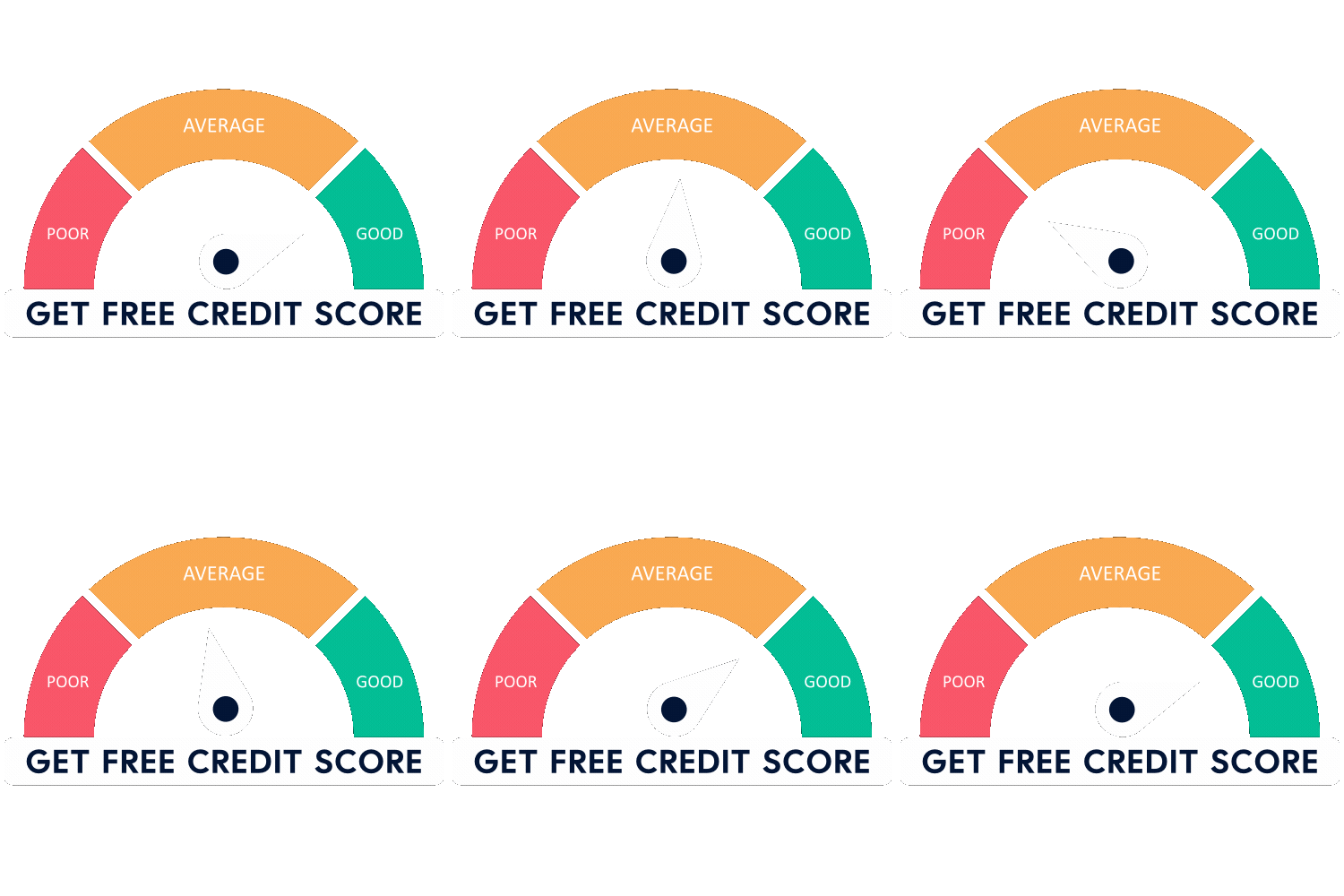
Lenders analyze this score, generated by agencies like Dun & Bradstreet, to assess your past borrowing and repayment behaviour. A strong credit score (generally above 670) signifies reduced risk for lenders, translating to lower interest rates.
Conversely, a poor credit score raises red flags, potentially leading to higher rates or even loan rejection.
Business Age & Financial History:
Established businesses with several years of operation typically enjoy lower interest rates compared to newer ventures. Furthermore, consistent financial performance strengthens your case for favourable terms.
Loan Amount & Repayment Tenure:
Larger loan amounts naturally carry a higher risk for lenders, often resulting in slightly higher interest rates. Similarly, longer repayment tenures may incur slightly higher rates compared to shorter durations.
Collateral:
In case of repayment defaults, the collateral can be liquidated to recoup their losses. This reduces the perceived risk and can lead to significantly lower interest rates.
Industry & Market Conditions:
Businesses in stable or growing industries with strong demand will generally get better rates than those in volatile or declining sectors.
Also Read: Impact of Inflation on Loans Innovative Ways to Manage Borrowing Costs!
The Role of Creditworthiness: A Critical Element
Creditworthiness, put simply, is an assessment of an individual’s ability to repay debt. This assessment is typically based on various factors, including:
Credit history:
This includes past borrowing and repayment behaviour, reflected in credit reports and credit scores.
Income and employment:
Stable income and secure employment demonstrate the ability to manage debt repayments.
Debt-to-income ratio:
This measures the percentage of income dedicated to existing debt obligations, indicating available capacity for additional borrowing.
Collateral:
Assets that can be used to secure the loan in case of default can mitigate risk for lenders.
Tech-led Risk Evaluation For Business Loan
New lenders are using technology to offer alternative and more inclusive financing options, addressing the challenges faced by small businesses in traditional lending.
Flexibility in Credit Decisioning:
- Tech-led risk assessment empowers lenders to create customizable rating scorecards. This flexibility allows for the consideration of alternative data points beyond traditional credit reports, such as social media engagement, e-commerce transactions, or even supply chain data (worldbank.org).
- This data-driven approach fosters young businesses, or those operating in the informal sector who may not have a traditional credit history (frbsf.org).
Leveraging Artificial Intelligence and Machine Learning:
- Fintechs and NBFCs are at the forefront of utilizing AI and ML models for credit decision-making. These models analyze vast amounts of data, to predict creditworthiness with greater accuracy (capgemini.com).
- AI-powered models can dynamically adjust risk assessments in real-time based on changes in market conditions or the borrower’s financial behaviour. (datrics.ai).

The Path Forward: Helping Small Businesses with New Tools
Small businesses are the foundation of the economy, driving innovation, creating jobs, and fostering vibrant communities. Navigating traditional financial institutions with mountains of paperwork, rigid lending criteria, and high-interest rates can be daunting for many small business owners.
This path forward is illuminated by the factors given below:
1. Building Bridges, Not Barriers:
Collaboration between traditional financial institutions, FinTechs, and government agencies is crucial to break down barriers. Initiatives like simplified regulatory frameworks, data-sharing agreements, and co-funding programs can incentivize lenders. Which extends credit to underserved communities and reduces the paperwork burden for small businesses.
2. Increasing Financial Literacy:
Empowering small business owners with financial literacy skills is important. Educational programs on loan terms, financial planning, and responsible borrowing equip them to make informed decisions and manage debt effectively.
3. Embracing Technology:
The rise of FinTech (financial technology) is revolutionizing the landscape. AI-powered platforms create dynamic credit assessments that go beyond traditional credit scores. This allows lenders to tailor loan offerings to the unique needs and risk profiles of small businesses, fostering financial inclusion for those previously excluded by rigid lending models.
Also Read: 7 Major Reasons to Avoid Business Loan Application Rejection!
Conclusion:
The question that resonates is not just about interest rates; it’s about inclusivity. How can these advancements further revolutionize access to credit for the underserved? The journey toward inclusive and accessible financing for small businesses is well underway, guided by the principles of innovation, flexibility, and a commitment to empowering entrepreneurs on their financial quests.
Download Personal Loan App
Get a loan instantly! Best Personal Loan App for your needs!!
Looking for an instant loan? Buddy Loan helps you get an instant loan from the best verified lenders. Download the Buddy Loan App from the Play Store or App Store and apply for a loan now!
Download the Buddy Loan App Now!
One solution to each of your financial needs at your fingertip.

Scan to download now


Frequently Asked Questions
Q. What factors influence business loan interest rates?
A. Business loan interest rates are influenced by factors such as creditworthiness, economic conditions, and the financial health of the business.
Q. How does the borrower’s credit score impact business loan interest rates?
A. A higher credit score typically results in lower business loan interest rates, reflecting the borrower’s creditworthiness.
Q. What role do the loan amount and term play in determining interest rates?
A. Loan amount and term affect interest rates; larger amounts or longer terms may lead to higher rates due to increased risk for lenders.
Q. How do economic conditions influence business loan interest rates?
A. Economic conditions, including inflation and market trends, can impact interest rates, with recessions often leading to higher rates.
Q. Are there specific types of loans that generally have lower interest rates?
A. Government-backed loans, such as SBA loans, often have lower interest rates due to reduced risk for lenders.