Leveraging your property to meet personal or business financial needs is a practical solution many consider. That’s exactly where a Loan Against Property (LAP) comes in to bring the bigger picture.
You might be looking for funds for expansion, education, medical emergencies, or even debt consolidation. LAP offers a secure way to unlock most of your property’s value.
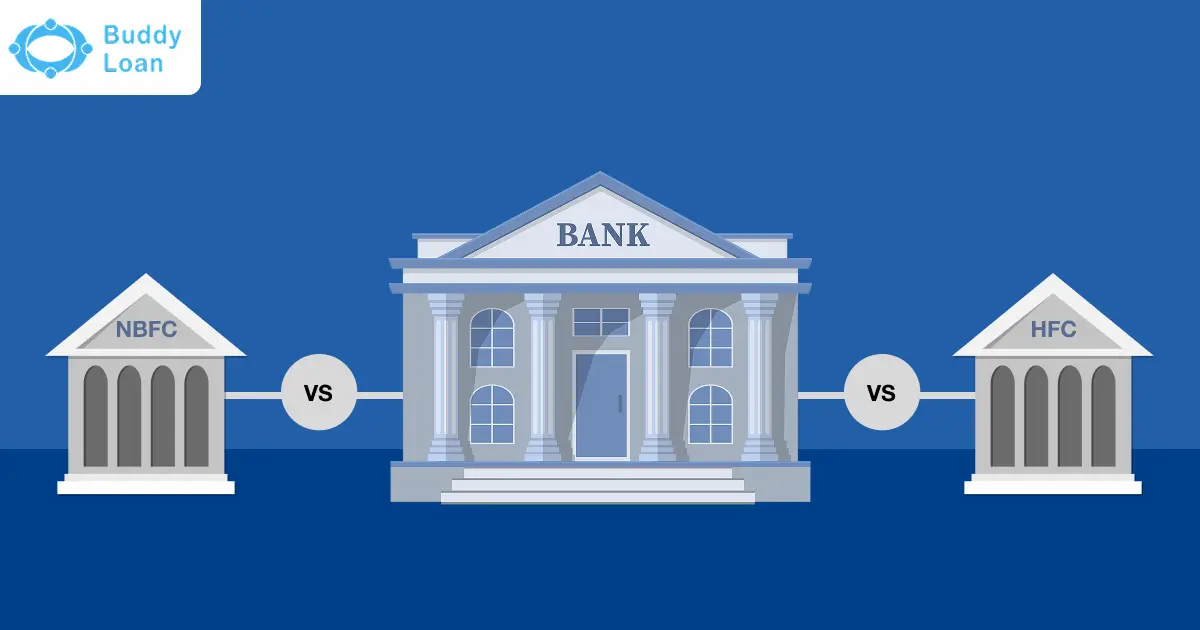
But when it comes to choosing a lender, you’ll often find three main options: Banks, Non-Banking Financial Companies (NBFCs), and Housing Finance Companies (HFCs). Each category offers LAP, but their approach, costs, and flexibility differ.
So, who offers the better LAP? Read on to find out.
Understanding the Lending Institutions: Banks vs NBFCs vs HFCs
Before comparing LAP features, it’s important to understand the nature of these financial entities:
Banks are regulated directly by the Reserve Bank of India (RBI) under the Banking Regulation Act, 1949. They offer a broad range of financial services, including deposit accounts and investment products.
- Deposits are insured up to ₹5 lakh under DICGC, and they follow strict lending norms.
- Typical LAP rates start at 8% to 12%.
NBFCs are registered under the Companies Act and regulated by the RBI, but they do not hold a full banking license. They cannot accept demand deposits, and their deposits are not insured.
- NBFCs are largely focused on lending and often offer more flexible loan terms.
- Typical LAP rates start at 11% to 18%
HFCs were originally set up to offer home loans, but since the 2019 regulatory changes, they function much like NBFCs, especially in LAP offerings, though with a housing finance orientation.
- Typical LAP rates start at 10% to 16%.

Cost Comparison: Interest Rates and Processing Fees
When it comes to LAP, cost is often a key deciding factor. This starts with interest rates.
Here is a table showing major differences between each type of lender:
| Lender Type | Typical Interest Rate Range | Key Factors |
|---|---|---|
| Banks | 8% to 12% |
|
| NBFCs | 11% to 18% |
|
| HFCs | 10% to 16% |
|
Flexibility & Speed: Who Is Easier to Borrow From?
This is where NBFCs and HFCs tend to shine.
Banks generally ask for a higher credit score, consistent income proof, detailed documentation, and properties that fall within specific municipal limits.
Their process is thorough but can be time-consuming, often taking over a week for approval and disbursement.
Also Read: Mortgage loan
Who Offers Better Tenure & Loan Amount?
If you’re looking for a high-value loan, banks typically offer larger loan amounts and longer tenures (up to 15-20 years), provided the borrower has a solid credit profile and eligible property.
However, some NBFCs also offer high-value LAPs. For example, Tata Capital offers LAPs up to ₹10 crore, depending on property and applicant eligibility.

Customer Experience and Additional Services of LAP
Banks offer a complete suite of financial services, including:
- Savings accounts
- Credit cards
- Investment advisory
- Insurance products
However, in the case of NBFCs and HFCs, they differ greatly in certain circumstances.
NBFCs & HFCs are Flexible and Fast for LAP
NBFCs and HFCs offer faster loan approvals, sometimes within 72 hours, and are far more lenient with documentation. They frequently cater to:
- Borrowers with credit scores as low as 650
- Self-employed individuals or freelancers with irregular income
- Properties in less strictly regulated zones
These institutions use digital verification tools, including Video KYC and OCR, to speed up the process.
In the modern era of lending, everything falls under the regulations put forth by the RBI. So if you are someone with a relatively low credit score or who couldn’t follow up on the stringent restrictions of the banks, an NBFC or HFC is your best option.
Here is a comparison of NBFC and HFC, so that you can make a smart choice more easily:
| Factor | NBFC (Non-Banking Financial Company) | HFC (Housing Finance Company) |
|---|---|---|
| Interest Rates | 11% to 18%: Higher rates, but flexible and negotiable for large loans. | 10% to 16%: Slightly lower, but fixed rates. |
| Tenure | Up to 20 years: Flexible loan terms. | Up to 15-20 years: Standard terms. |
| Credit Score Requirements | 650-700: More inclusive for those with lower credit scores or non-traditional income. | 700+: Strict credit score requirements. |
| Loan Amounts | Up to ₹10 Crores: Higher loan limits and more flexibility. | Generally lower amounts. |
| Processing Speed | Fast: Loan approval in as little as 72 hours with digital tools. | Slower: May take 5-10 days due to paperwork. |
| Documentation | Minimal: Fewer documents required, good for self-employed and freelancers. | Detailed: Requires income proof, tax returns, and property documents. |
| Eligibility | More flexible: Accepts self-employed and informal income groups. | Strict: Focused on formal income and homebuyers. |
| Customer Service | Personalised, faster responses and better service. | Standard, less personalised support. |
| Loan Use | Flexible loans for business, education, etc., not just property. | Mainly property-related, focused on home loans. |
You see, an LAP from an NBFC can be a great choice for most looking for a flexible option without a heavy burden. They also tend to offer the highest Loan to Value ratio for your property.
If you want to find out which lender, NBFC, Bank, or HFC, is best for your profile, start searching for it smartly with the help of Buddy Loan – not a lender, but a platform for many.
Which Lender is Right for You Loan Against Property?
Ultimately, choosing between a bank, NBFC, or HFC for your LAP depends on your personal financial profile and what you value more: low cost, flexibility, or speed.
Choose a Bank if:
- You have a strong credit score and a stable income
- You prefer lower interest rates and longer tenures
- You’re okay with a longer processing timeline in exchange for savings
Choose an NBFC or HFC if:
- You need quick approval and disbursal
- You have a less-than-perfect credit score
- You’re self-employed or have unconventional income sources
- You prefer digital, on-demand service and flexible terms
Conclusion
A Loan Against Property is a significant financial decision. Whether you choose a Bank, an NBFC, or an HFC, ensure you understand the costs, eligibility, repayment structure, and customer experience on offer.
The right lender is not always the one with the lowest interest rate it’s the one that aligns with your financial goals, timeline, and profile.
Take time to compare offers, read the fine print, and choose the path that fits your needs best. Use an EMI calculator to have your monthly repayment picture on track.
Download the Buddy Loan App Now!
One solution to each of your financial needs at your fingertip.

Scan to download now