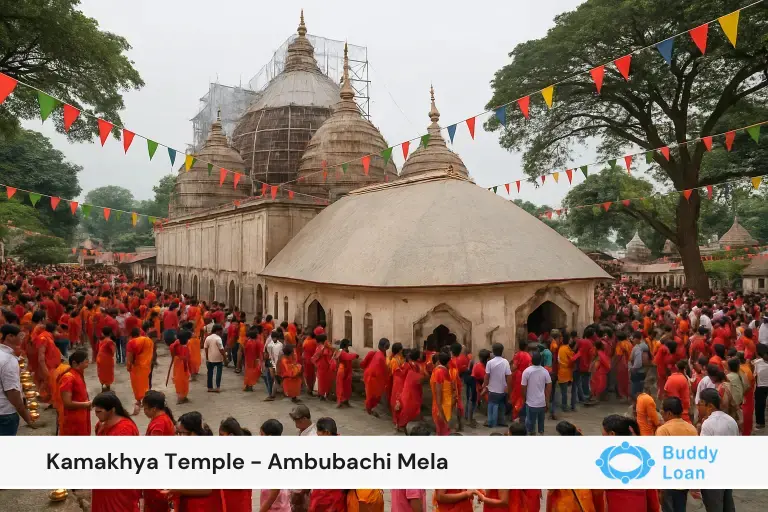
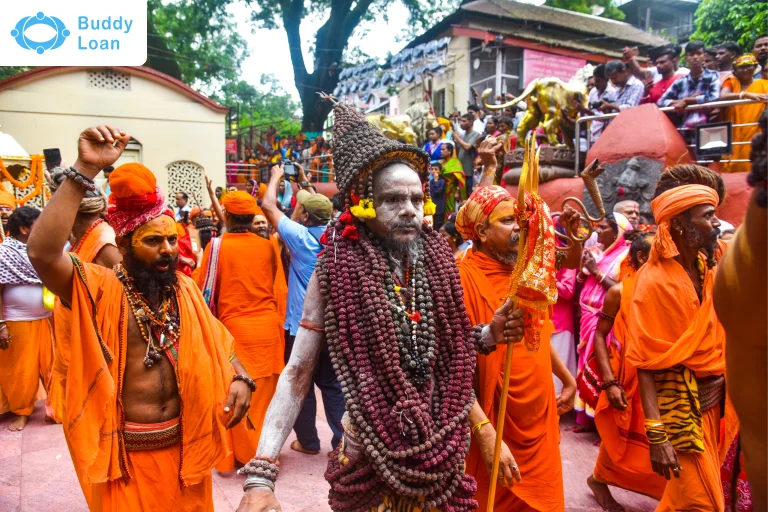
The Ambubachi Mela is a sacred festival held every year at the Kamakhya Temple in Guwahati, Assam. This mela it’s not about celebration, but about spiritual reflection and reverence. The event marks the annual menstruation of Goddess Kamakhya, a symbol of the Earth’s fertility and feminine power.
Deeply rooted in Hindu and Tantric traditions, the four-day mela draws millions of pilgrims, sadhus, and spiritual seekers from across India. During this time, the temple remains closed and reopens with special rituals believed to purify and honor the goddess.
In this blog, we will guide you about the Ambubachi Mela 2025—including its dates, rituals, temple significance, and travel tips to help you plan your visit.
| Latest Update: Kamakhya Temple doors open after 4 days of Ambubachi Mela. Thousands of devotees assemble for the divine blessings. Worship at the temple was suspended from the time of ‘Prabritti’ (June 22nd) and resumed on 26th June morning after the ‘Nibritti’, when the temple doors were reopened to devotees. |
Facts About Amabachi Mela
|
What is Ambubachi Mela?
The Kamakhya Temple is known for its unique traditions. Devotees can directly touch the Peetha, symbolizing an intimate bond with the goddess. The temple welcomes people of all faiths, genders, and castes, reflecting universal love.
The word “Ambubachi”, meaning the flow of water and creation, celebrates the goddess’s sacred seclusion. Perched atop Nilachal Hill, the temple’s mystical surroundings deepen its spiritual allure.
Ambubachi Mela 2025 Date & Time
The Ambubachi Mela follows the Assamese lunar calendar and is observed during the month of Ahaar, typically falling in mid-June. Below is a detailed timeline of the key events and spiritual significance associated with the 2025 celebration.
| Event | Date | Details |
| Start Date | 22nd June 2025 | Marks the beginning of the goddess’s annual menstruation cycle. |
| End Date | 26th June 2025 | Temple reopens with grand rituals and massive footfall for darshan. |
| Month | Ahaar (Assamese calendar) | Occurs during mid-June, aligning with the lunar calendar. |
| Ritual | 4-day closure of Kamakhya Temple | Symbolizes fertility, regeneration, and divine feminine power. |
Note: The temple remains completely closed to devotees during the first three days of the mela. It reopens on the fourth day with sacred rituals that attract massive gatherings from across the country.
|
The Ambubachi Mela 2025 at Kamakhya Temple will be observed from June 22 to June 26. The temple doors was closeed at 8:43 AM on June 22 for the goddess’s annual menstruation ritual, marking the start of Snan (holy bath) and Nitya Puja (daily worship). Devotees are not allowed during this period. The temple has reopened at 3:19 AM on June 26, after the completion of the Nribritti ritual and purification ceremonies. Entry resumes with prayers, offerings, and celebrations, marking the goddess’s renewed fertility and divine grace. |

Spiritual Importance of Ambubachi Festival
Rooted in ancient Tantric traditions , the festival embodies deep symbolism, reverence, and spiritual transformation, making it one of the holiest gatherings in the Kamakhya Devi festival calendar .
⇒ Spiritual Importance of Ambubachi Festival
The Ambubachi Mela is not just a religious event—it’s a profound spiritual experience that celebrates the divine feminine energy and the sacred cycles of nature. Rooted in ancient Tantric traditions, the festival embodies deep symbolism, reverence, and spiritual transformation, making it one of the holiest gatherings in the Kamakhya Devi festival calendar.
⇒ Divine Menstruation of Goddess Kamakhya
At the heart of the ambubachi mela history lies the belief that Goddess Kamakhya undergoes her annual menstruation cycle during this time. Rather than viewing menstruation as taboo, the festival honors it as a sacred expression of creation and fertility, tying it deeply to the rhythms of the Earth itself.
⇒ Celebration of Fertility and Regeneration
The Ambubachi festival symbolizes the fertility of the Earth and the regenerative power of nature. Devotees see this period as a reminder of the cyclical renewal of life, growth, and the universe’s continuous dance of creation.
⇒ Reverence Through Temple Closure
During Ambubachi Mela 2025, like every year, the Kamakhya Temple will be closed for three days, reflecting profound respect for the goddess’s sacred seclusion. No worship or offerings occur, and the temple’s Garbhagriha is believed to flood naturally with a spring, symbolizing the goddess’s menstrual flow.
⇒ Pause in Daily Life
In devotion, locals and devotees pause daily activities like farming, cooking, and trading during the ambubachi mela date window. This practice aligns the community spiritually with the goddess’s sacred rest, enhancing a collective spiritual atmosphere throughout Guwahati and Assam.
⇒ Reopening as a Symbol of Spiritual Awakening
On the fourth day, the temple reopens with grand rituals. Pilgrims often collect the blessed Ambubachi cloth—a piece of red cloth soaked with the sacred energy of the festival—as a divine token of protection and prosperity. The reopening is seen as a powerful moment of spiritual rebirth and renewed blessings.
⇒ Mass Pilgrimage and Blessings
The Ambubachi Mela 2025 will once again witness a massive influx of pilgrims, Tantric practitioners, and spiritual seekers. As seen in previous years, like the Ambubachi Mela 2022, thousands gather to receive the goddess’s blessings. For many, the experience of being part of this vibrant spiritual event is life-changing.
Major Rituals & Observances at Ambubachi Mela
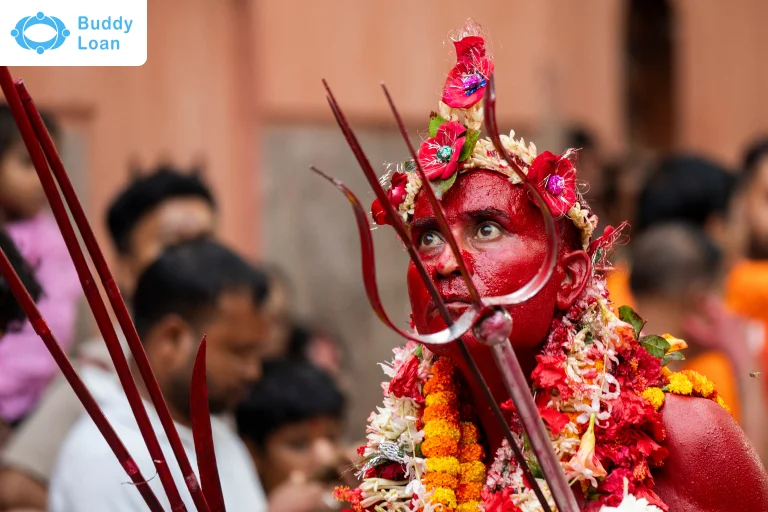
The Ambubachi Mela marks a period of profound reverence for Goddess Kamakhya , celebrating her connection with nature, fertility, and feminine energy. Here’s a look at the key rituals and practices observed during the festival:
- Temple Closure (Symbol of the Goddess’s Menstruation)
The Kamakhya Temple closes for three days , symbolizing the annual menstrual cycle of Goddess Kamakhya . No pujas or temple rituals are performed during this sacred time, and devotees respect the goddess’s seclusion by pausing all worship activities. - Ritual Bathing of the Deity and Sanctum
On the fourth day, a ceremonial cleansing of the goddess’s idol and the inner sanctum is performed. This ritual bath (abhishek) signifies purification and renewal, preparing the temple for public reopening. - Temple Reopening Ceremony
On the fourth day, the temple doors reopen with grand rituals and Vedic chanting . Thousands gather for darshan, believing this moment to be especially auspicious, as the goddess is considered spiritually “cleansed” and empowered . - Offering of Red Cloth (Symbolic of Menstruation)
Devotees often offer red cloth or red items , symbolizing menstruation and celebrating Shakti (divine feminine power) . This act is a gesture of acceptance and reverence for the natural cycle of womanhood and fertility. - Animal Sacrifices
Although controversial, animal sacrifices (typically goats or pigeons) are still practiced by some devotees as offerings to the goddess. These rituals are rooted in traditional Tantric practices , though the temple administration and several devotees are now shifting toward non-violent offerings . - Symbolic Offerings of Fruits and Flowers
There’s a growing trend, especially among younger pilgrims, to offer fruits, flowers, coconuts, and incense instead of traditional animal offerings, promoting non-violence and spiritual symbolism .
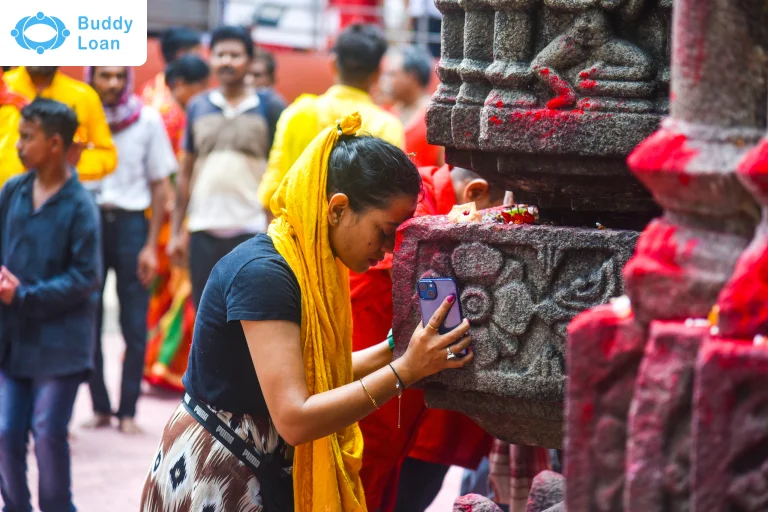
- Japa and Tantric Chanting
Many devotees engage in japa (repetition of sacred mantras) and meditative chanting , often guided by spiritual gurus or Tantric practitioners. These practices are believed to deepen the spiritual connection with the goddess and awaken inner Shakti (energy) . - Pinda Daan (Ritual for Ancestors)
Pinda daan , the offering of rice balls to one’s ancestors, is also performed by many devotees at Kamakhya. This ancestral ritual expresses gratitude and seeks blessings from departed family members, reinforcing spiritual lineage and dharma .

How to Reach Kamakhya Temple
Reaching the Kamakhya Temple is fairly easy, as Guwahati is one of the most well-connected cities in Northeast India. Here’s a quick travel guide for first-time visitors:
- By Air – Lokpriya Gopinath Bordoloi International Airport
The nearest airport is Lokpriya Gopinath Bordoloi International Airport (GAU) , located around 20 km from the temple. It offers regular domestic flights from major Indian cities like Delhi, Mumbai, Kolkata, and Bangalore, along with limited international connections. - By Train – Guwahati Railway Station
Guwahati Railway Station , just 7–8 km from Kamakhya Temple, is a major rail hub in the Northeast. It connects to nearly all metro cities across India with daily and weekly express trains. - By Local Transport
From the airport or railway station, visitors can hire taxis, auto-rickshaws, shared cabs , or even app-based ride services like Ola and Uber . The roads leading up to the temple are steep, but motorable. E-rickshaws and small cabs operate regularly near the base. - Distance from City Center
Kamakhya Temple is located on the Nilachal Hill , approximately 8 km from the heart of Guwahati city . The uphill route is scenic and takes about 20–30 minutes by car, depending on traffic.
Things to Know Before Going to Ambubachi Mela
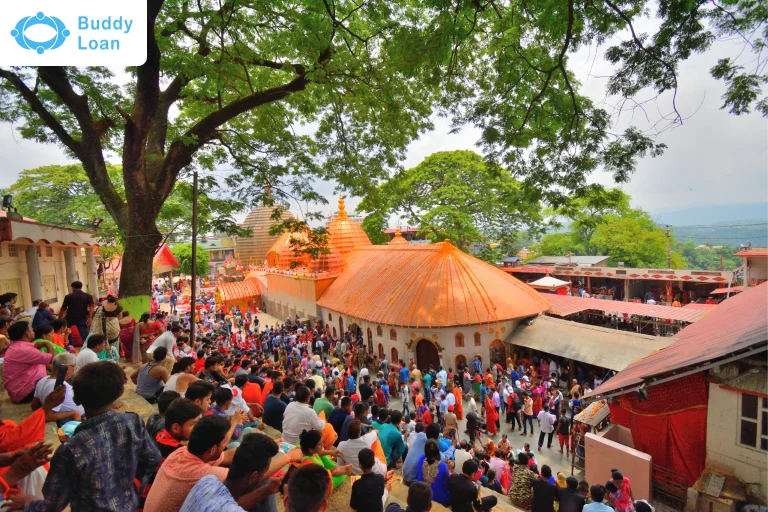
To ensure a safe, meaningful, and respectful experience, there are several important things first-time visitors must know — insights that many don’t often share.
⇒ Touch the Peetha
At Kamakhya Temple, devotees are allowed to physically touch the Peetha (sacred yoni stone) , symbolizing a direct spiritual connection with the goddess . This is rare in Hindu temples, making the experience even more special.
⇒ Acceptance of All
The temple is open and welcoming to people of all faiths, genders, and castes , embodying Kamakhya Devi’s universal love, inclusivity, and the acceptance of all beings .
⇒ Mystical Aura of Nilachal Hill
Set atop Nilachal Hill , the temple is surrounded by ancient ruins, forests, and an ethereal mist , offering a serene and mystical atmosphere that draws not just devotees but also spiritual seekers from around the world.
⇒ The Most Sacred Offering: Holy Water
The blessed water from the Garbhagriha (sanctum) is considered the most important prasad, much like Gangajal.
⇒ Aviod Expensive Pooja Kits
Many vendors outside the temple will try to sell you overpriced and unnecessary pooja items . You can avoid them for a meaningful offering.
⇒ Meaningful Offerings
Offer simple and sacred items like red hibiscus flowers and sindoor (vermilion) , which are beloved by Goddess Kamakhya.
Everything else being sold—large garlands, elaborate baskets, and excessive pooja kits—is optional and not required .
Conclusion
Visiting the Ambubachi Mela is not just about attending a festival— it’s about stepping into a living, breathing expression of the divine feminine energy .
As you walk the sacred grounds of Kamakhya Devi Temple , on — it’s a divine encounter with the raw, creative power of Shakti herself , pulsating through the hills, the water, and the hearts of millions who gather to honor her.

Download the Buddy Loan App Now!
One solution to each of your financial needs at your fingertip.

Scan to download now