Today, securing a loan has become an integral part of achieving various personal and professional milestones. There might be needs that you couldn’t afford in the moment with your salary or savings alone, such as purchasing a dream home, funding a child’s education, expanding a business, or managing unforeseen expenses. Bank loans provide the necessary financial leverage to cover them at competitive rates.
This guide offers an in-depth exploration of the various types of bank loans available in India, their corresponding interest rates, and the top lending institutions. Understanding the nuances of each loan type is crucial for making informed financial decisions that align with your long-term goals. Read on to learn more about the various types of loans provided in India and your best options to secure them.


Types of Loans
Banks and non-banking financial companies (NBFCs) in India offer a diverse portfolio of loan products to meet a wide range of your needs.
These loans can be broadly categorised as secured loan and unsecured loan. Secured loans require collateral, such as property or gold, which reduces the risk for lenders and typically results in lower interest rates. Unsecured loans, on the other hand, do not require any collateral and are approved based on the borrower’s creditworthiness and income, often carrying higher interest rates due to the increased risk for the lender.
Here are the top 10 types of bank loans available in India:
- Personal Loans: These are unsecured loans that can be used for various purposes, from medical emergencies to travel expenses.
- Home Loans: Secured loans taken for purchasing a residential property.
- Gold Loans: Secured loans where gold jewellery or coins are pledged as collateral.
- Vehicle Loans: These are secured loans for purchasing a new or used vehicle, with the vehicle itself serving as collateral.
- Loan Against Property (LAP): A secured loan where a residential or commercial property is mortgaged to avail funds.
- Education Loans: These loans are designed to finance higher education expenses for students.
- Business Loans: These loans cater to the financial needs of businesses, including working capital, expansion, and equipment purchase.
- Credit Cards: A form of revolving credit that allows users to borrow funds up to a certain limit.
- Loan Against Fixed Deposits: A secured loan where the borrower’s fixed deposit is used as collateral.
- Loan Against Securities: A loan taken against financial securities like shares, mutual funds, and bonds.

Personal Loans
These are unsecured credit instruments, meaning they do not require collateral, but this convenience comes at a cost. Lenders rely heavily on your CIBIL score and ‘Debt-to-Income Ratio’ to determine eligibility.
A common trap for borrowers is the ‘Flat Rate’ vs. ‘Reducing Balance’ interest calculation; a flat rate of 10% is actually more expensive than a reducing rate of 16%. Always ask for the annualised percentage rate (APR) to compare offers accurately.
Here is the overview of personal loans in India:
| Feature | Typical Market Range (2025) |
| Interest Rate | 10.50% p.a. – 24.00% p.a. |
| Loan Tenure | 12 Months – 60 Months |
| Processing Fee | 0.5% – 2.5% of Loan Amount |
| Pre-closure Charges | Nil – 4% (Often locked for 6-12 months) |
| Eligibility | Credit Score > 750 preferred |
Home Loans
Home loans are long-term commitments where the interest regime (Fixed vs. Floating) dictates your financial health. Most current loans are linked to the Repo Linked Loan Rate (RLLR), ensuring transparency, but this also means your EMI fluctuates immediately with RBI policy changes.
A critical, often overlooked factor is the ‘LTV Ratio’ (Loan-to-Value); banks typically fund only 75-90% of the property cost, leaving you to arrange the down payment plus registration charges and stamp duty independently.
Here is the overview of home loans in India:
| Feature | Typical Market Range (2025) |
| Interest Rate | 8.35% p.a. – 10.50% p.a. |
| Loan Tenure | Up to 30 Years |
| LTV Ratio | 75% (Loans > ₹75L) to 90% (Loans < ₹30L) |
| Tax Benefits | Sec 80C (Principal) & Sec 24b (Interest) |
| Processing Fee | ₹2,000 – 0.50% of Loan Amount |
Gold Loans
This is the fastest way to monetise idle assets without income proof or a high credit score. The loan value is determined by the ‘LTV Cap’ set by the RBI (typically 75% of the gold’s market value), not the making charges or stone weight.
A unique advantage here is the ‘Bullet Repayment’ option, allowing you to pay the entire principal and interest at the end of the tenure, unlike the monthly EMIs of standard loans.
Here is the overview of gold loans in India:
| Feature | Typical Market Range (2025) |
| Interest Rate | 8.80% p.a. – 18.00% p.a. |
| Loan Tenure | 3 Months – 36 Months |
| LTV Ratio | Up to 75% of Gold Value |
| Repayment Mode | EMI or Bullet Repayment |
| Processing Time | 30 Minutes – 4 Hours |
Vehicle Loans
While dealer financing is convenient, it is often marked up with hidden commissions; direct bank financing usually offers better rates. A critical nuance is the distinction between ‘Ex-Showroom’ and ‘On-Road’ funding; most banks fund 85-90% of the on-road price, which includes insurance and registration.
Ensure you check the ‘Hypothecation Removal’ process upfront, as this is mandatory to sell the car later.
Here is the overview of vehicle loans in India:
| Feature | Typical Market Range (2025) |
| Interest Rate (New) | 8.75% p.a. – 12.00% p.a. |
| Interest Rate (Used) | 11.00% p.a. – 18.00% p.a. |
| Loan Tenure | 3 Years – 7 Years |
| LTV Ratio | 85% – 100% of On-Road Price |
| Foreclosure Charges | 2% – 5% of Outstanding Principal |
Loan Against Property (LAP)
LAP allows you to unlock the value of a ‘dead asset’ like a self-occupied house or a vacant commercial plot. These loans are significantly cheaper than personal loans because they are secured, but the processing time is longer due to legal verification and property valuation.
Be aware that the LTV is conservative here; banks rarely lend more than 60-70% of the property’s market value to mitigate real estate volatility risks.
Here is the overview of LAP in India:
| Feature | Typical Market Range (2025) |
| Interest Rate | 9.50% p.a. – 12.50% p.a. |
| Loan Tenure | Up to 15 Years |
| LTV Ratio | 50% – 70% of Property Value |
| Property Type | Residential, Commercial, or Industrial |
| Processing Fee | 0.50% – 1.00% of Loan Amount |
Education Loans
Designed to fund higher studies, these loans cover tuition, accommodation, and even travel expenses. The defining feature is the ‘Moratorium Period’ (course duration + 6 to 12 months), during which you don’t have to pay the principal.
For loans under ₹4 Lakhs, no collateral or third-party guarantee is required, making it accessible for merit students.
Here is the overview of education loans in India:
| Feature | Typical Market Range (2025) |
| Interest Rate | 8.50% p.a. – 14.00% p.a. |
| Loan Tenure | Up to 15 Years (Post Moratorium) |
| Collateral Limit | Required for loans > ₹7.5 Lakhs |
| Tax Benefit | Full Interest deduction under Sec 80E |
| Margin Money | Nil (Up to ₹4L) to 15% (Study Abroad) |
Business Loans
These facilities cater to working capital needs or expansion and are categorized into ‘Term Loans’ or ‘Overdrafts’. Lenders scrutinize your GST returns and vintage (years in business) more than just the profit margins.
A vital insight is that ‘Unsecured Business Loans’ carry a high risk premium; opting for a CGTMSE-backed loan (government guarantee scheme) can significantly lower your collateral burden.
Here is the overview of business loans in India:
| Feature | Typical Market Range (2025) |
| Interest Rate | 11.00% p.a. – 22.00% p.a. |
| Loan Tenure | 12 Months – 60 Months |
| Eligibility | Min. 2-3 Years Business Vintage |
| Loan Type | Term Loan, Overdraft, Cash Credit |
| Documentation | ITR, GST Returns, Bank Statements |
Credit Cards
Credit cards are essentially interest-free short-term loans, provided you pay the ‘Total Amount Due’ by the deadline. The most dangerous trap is the ‘Minimum Amount Due’; paying only this attracts finance charges of 36-48% p.a. on the entire outstanding balance from the date of purchase.
Utilisation ratio is key here; consistently using >30% of your limit can negatively impact your credit score.
Here is the overview of credit cards in India:
| Feature | Typical Market Range (2025) |
| Interest Free Period | 45 – 50 Days |
| Finance Charges (APR) | 36% p.a. – 48% p.a. |
| Cash Advance Fee | 2.5% – 3.0% of Withdrawal Amount |
| Late Payment Fee | ₹100 – ₹1,300 (Based on Slab) |
| Forex Markup | 1.99% – 3.50% (International Usage) |
Loan Against Fixed Deposits
This is the most cost-effective way to handle a liquidity crunch without breaking your investment and losing interest earnings. The bank marks a lien on your FD and gives you an overdraft limit, typically charging just 1% to 2% above your FD interest rate.
Since the bank already holds your money, there is zero processing fee and no credit check required.
Here is the overview of loans against fixed deposits in India:
| Feature | Typical Market Range (2025) |
| Interest Rate | FD Rate + 1.00% to 2.00% |
| LTV Ratio | 85% – 95% of FD Value |
| Processing Fee | Usually Nil |
| Eligibility | Any FD holder (Single/Joint) |
| Repayment | Flexible (Interest only on utilised amount) |
Loan Against Securities (LAS)
LAS allows you to pledge financial assets like shares, mutual funds, or insurance policies to get an overdraft limit. The critical factor here is the ‘Haircut’ (margin); banks might lend only 50% of the value of equity shares due to volatility, whereas debt mutual funds can fetch up to 80%.
This facility is ideal for traders who need liquidity but don’t want to trigger capital gains tax by selling their portfolio.
Here is the overview of loan against securities in India:
| Feature | Typical Market Range (2025) |
| Interest Rate | 9.00% p.a. – 12.00% p.a. |
| LTV (Equity) | 50% of Market Value |
| LTV (Debt/Bonds) | Up to 80% of Market Value |
| Loan Type | Overdraft Facility |
| List of Securities | Approved Scrips List (Bank Specific) |
Different Types of Loans and Interest Rates
Understanding the interest rates associated with each loan type is crucial for assessing the overall cost of borrowing. The interest rates are influenced by several factors, including the type of loan, the borrower’s credit score, income, and the lender’s policies.
1. Personal Loan Interest Rates
Personal loans are a popular unsecured loan choice for immediate financial needs due to their versatility and the absence of collateral requirements. However, the interest rates for personal loans are generally higher than compared for secured loans.
Here is a list of the top personal loan interest rates in India:
| Bank / NBFC | Interest Rate (per annum) |
| ICICI Bank | 10.60%* and 16.50%* |
| Axis Bank | 9.99%* – 22.00%* |
| IDFC FIRST Bank | 9.99%* – 20.10%* |
| Punjab National Bank | 10.50%* onwards |
| Federal Bank | 11.99%* onwards |
| HDFC Bank | 10.75%* – 22.50%* |
| State Bank of India | 10.20%* onwards |
| Kotak Mahindra Bank | 10.99%* onwards |
| Bank of Baroda | 10.90%* onwards |
| IndusInd Bank | 10.49%* onwards |
| Bajaj Finserv | 11.00%* onwards |
| Tata Capital | 10.99%* onwards |
| HDB Financial Services | Up to 36%* |
| SMFG India Credit | 11.99%* onwards |
| IIFL Finance | 12.75%* – 44.00%* |
| Buddy Loan | 11.99%* onwards |
*Please be aware that interest rates may change periodically, as determined by the respective lenders.
A personal loan is also one of the best and most flexible options out there, as you can use this loan for almost any need of yours. This includes personal expenses, travel or even investments. However, check the details like return and interest rates before you proceed with usages like investments.
2. Home Loan Interest Rates
Home loans are long-term secured loans with the property itself serving as collateral. They typically have lower interest rates compared to other loan types due to the secured nature of the loan.
Here is a list of the top home loan interest rates in India:
| Bank / NBFC | Interest Rate (per annum) |
| Bank of Baroda | 8.40%* onwards |
| Central Bank of India | 8.35%* onwards |
| Bank of India | 8.30%* onwards |
| Axis Bank | 8.75%* – 11.90%* |
| Punjab National Bank | 8.45%* – 10.65%* |
| State Bank of India | 8.50%* – 10.75%* |
| ICICI Bank | 8.75%* onwards |
| HDFC Bank | 8.50%* onwards |
| Union Bank of India | 8.35%* onwards |
| Kotak Mahindra Bank | 8.70%* onwards |
| LIC Housing Finance | 8.50%* onwards |
| Bajaj Housing Finance | 8.50%* onwards |
| Tata Capital Housing | 8.95%* onwards |
| PNB Housing Finance | 8.75%* onwards |
| Indiabulls Housing | 8.95%* onwards |
| Buddy Loan | 11.99%* onwards |
*Please be aware that interest rates may change periodically, as determined by the respective lenders.
3. Gold Loan Interest Rates
Gold loans are a quick and convenient way to secure funds by pledging gold ornaments. The interest rates are generally lower than personal loans. This is also a type of secured loan process, as you will be pledging your gold for security.
Here is a list of the top gold loan interest rates in India:
| Bank / NBFC | Interest Rate (per annum) |
| State Bank of India | 8.85%* onwards |
| HDFC Bank | 9.30%* – 17.86%* |
| ICICI Bank | 10.00%* onwards |
| Canara Bank | 9.25%* onwards |
| Bank of Baroda | 8.80%* onwards |
| Axis Bank | 17.00%* onwards |
| Federal Bank | 8.99%* onwards |
| Kotak Mahindra Bank | 9.00%* – 24.00%* |
| Punjab National Bank | 9.25%* onwards |
| Union Bank of India | 9.30%* onwards |
| Muthoot Finance | 12.00%* – 26.00%* |
| Manappuram Finance | 9.90%* – 26.00%* |
| IIFL Finance | 9.24%* – 27.00%* |
| Bajaj Finserv | 9.50%* – 28.00%* |
| Tata Capital | 10.50%* onwards |
*Please be aware that interest rates may change periodically, as determined by the respective lenders.
4. Vehicle Loan Interest Rates
Vehicle loans, also known as auto or car loans, are secured loans where the vehicle being purchased acts as the collateral. This is a fairly flexible option; however, interest rates are comparatively more affordable than personal loans.
Here is a list of the top vehicle loan interest rates in India:
| Bank / NBFC | Interest Rate (per annum) |
| State Bank of India | 8.85%* – 9.80%* |
| Bank of India | 8.85%* onwards |
| ICICI Bank | 9.00%* onwards |
| Axis Bank | 9.30%* onwards |
| HDFC Bank | 8.75%* onwards |
| Canara Bank | 9.25%* onwards |
| Federal Bank | 12.55%* onwards |
| Punjab National Bank | 9.30%* onwards |
| Union Bank of India | 9.30%* onwards |
| Bank of Baroda | 8.70%* onwards |
| Tata Capital | 10.75%* onwards |
| Mahindra Finance | 12.00%* onwards |
| Sundaram Finance | Varies based on profile |
| HDB Financial Services | Varies based on profile |
| Shriram Finance | 11.50%* onwards |
*Please be aware that interest rates may change periodically, as determined by the respective lenders.
5. Loan Against Property (LAP) Interest Rates
A Loan Against Property allows you to leverage your existing property to secure a substantial loan amount for various personal or business needs.
Here is a list of the top LAP interest rates in India:
| Bank / NBFC | Interest Rate (per annum) |
| Bank of India | 10.85%* onwards |
| Bank of Baroda | 10.85%* – 16.50%* |
| Federal Bank | 12.60%* onwards |
| Central Bank of India | 10.15%* onwards |
| HDFC Bank | 9.40%* onwards |
| State Bank of India | 10.00%* – 11.30%* |
| IDFC First Bank | 9.00%* onwards |
| ICICI Bank | 10.85%* – 12.50%* |
| Kotak Mahindra Bank | 9.50%* onwards |
| Axis Bank | 10.50%* – 10.90%* |
| Bajaj Housing Finance | 9.75%* – 18.00%* |
| Tata Capital | 10.10%* onwards |
| LIC Housing Finance | 9.70%* – 12.85%* |
| PNB Housing Finance | 9.65%* – 13.00%* |
| Aditya Birla Capital | 10.50%* – 17.5%* |
*Please be aware that interest rates may change periodically, as determined by the respective lenders.
6. Education Loan Interest Rates
Education loans are designed to support students in pursuing their academic goals by covering tuition fees, living expenses, and other related costs. This means they often come at lower interest rates and are highly flexible, as the amount can be reduced with the assistance of government schemes.
Here is a list of the top education loan interest rates in India:
| Bank / NBFC | Interest Rate (per annum) |
| State Bank of India | 8.55%* onwards |
| Bank of Baroda | 8.15%* – 11.15%* |
| Union Bank of India | 11.25%* onwards |
| Axis Bank | 13.70%* – 15.20%* |
| ICICI Bank | 10.50%* onwards |
| IDFC First Bank | Varies based on profile |
| HDFC Bank | 9.50%* onwards |
| Punjab National Bank | 9.25%* onwards |
| Canara Bank | 9.25%* onwards |
| Bank of India | 10.85%* onwards |
| Avanse | 12.50%* – 13.50%* |
| HDFC Credila | 11.00%* onwards |
| InCred | 11.50%* onwards |
| Auxilo | 12.30%* onwards |
| Propelld | 10.75%* onwards |
*Please be aware that interest rates may change periodically, as determined by the respective lenders.
7. Business Loan Interest Rates
Business loans provide the necessary capital for entrepreneurs and businesses to grow, innovate, and manage their operations effectively.
Here is a list of the top business loan interest rates in India:
| Bank / NBFC | Interest Rate (per annum) |
| Yes Bank | 14.00%* – 19.00%* |
| RBL Bank | 17.50%* – 26.00%* |
| ICICI Bank | 11.25%* onwards |
| HDFC Bank | 10.75%* – 22.50%* |
| IDFC FIRST Bank | 12.00%* onwards |
| State Bank of India | 11.30%* – 14.30%* |
| Axis Bank | 11.00%* – 22.00%* |
| Bank of Baroda | 10.85%* onwards |
| Punjab National Bank | 10.40%* onwards |
| Kotak Mahindra Bank | 16.00%* onwards |
| Bajaj Finserv | 9.75%* – 30.00%* |
| Tata Capital | 12.00%* onwards |
| Lendingkart Finance | 12.00%* – 27.00%* |
| FlexiLoans | 12.00%* onwards |
| NeoGrowth Finance | 19.00%* – 24.00%* |
*Please be aware that interest rates may change periodically, as determined by the respective lenders.
8. Credit Card Interest Rates
Credit cards offer a revolving line of credit, and the interest is charged only on the outstanding balance that is not paid by the due date. The interest rates on credit cards are typically high.
Here is a list of the top credit card options and their interest rates in India:
| Bank / NBFC | Interest Rate (per month) |
| HDFC Bank | 1.99%* – 3.60%* |
| SBI Card | 2.75%* – 3.50%* |
| Axis Bank | 1.50%* – 3.60%* |
| ICICI Bank | 2.49%* – 3.67%* |
| HSBC Bank | 3.30%* onwards |
| Citibank | 3.75%* onwards |
| Standard Chartered Bank | 3.49%* onwards |
| American Express | 1.25%* – 3.50%* |
| RBL Bank | 3.99%* onwards |
| IndusInd Bank | 1.79%* – 3.83%* |
| Bajaj Finserv RBL | Up to 3.99%* |
| Tata Capital (Co-branded) | Varies by card partner |
| SBI Card (Standalone NBFC) | 2.75%* – 3.50%* |
| BOB Financial Solutions | Varies by card |
*Please be aware that interest rates may change periodically, as determined by the respective lenders.
Some NBFCs also offer co-branded credit cards.
9. Loan Against Fixed Deposit Interest Rates
This is a secured loan where you can borrow against your fixed deposit at a relatively low-interest rate, which is usually a certain percentage above the FD interest rate.
| Bank / NBFC | Interest Rate (per annum) |
| IDFC FIRST Bank | FD Rate + 2.00%* |
| South Indian Bank | FD Rate + 2.00%* |
| HDFC Bank | FD Rate + 1.00%* |
| ICICI Bank | FD Rate + 2.00%* |
| Axis Bank | FD Rate + 2.00%* |
| State Bank of India | FD Rate + 1.00%* |
| Punjab National Bank | FD Rate + 1.00%* |
| Bank of Baroda | FD Rate + 1.50%* |
| Canara Bank | FD Rate + 2.00%* |
| Union Bank of India | FD Rate + 2.00%* |
| Bajaj Finserv | Varies (against any bank’s FD) |
| Shriram Finance | Varies (against any bank’s FD) |
| Muthoot Capital | Varies |
*Please be aware that interest rates may change periodically, as determined by the respective lenders.
10. Loan Against Securities Interest Rates
This loan allows you to borrow against your investments in shares, mutual funds, and bonds. The interest rates are generally lower than unsecured loans.
| Bank / NBFC | Interest Rate (per annum) |
| ICICI Bank | 9.90%* – 11.75%* |
| HDFC Bank | 9.90%* onwards |
| State Bank of India | 11.15%* onwards |
| Axis Bank | 10.50%* onwards |
| Kotak Mahindra Bank | 9.49%* onwards |
| Yes Bank | 10.00%* onwards |
| IndusInd Bank | 9.00%* onwards |
| Bank of Baroda | 10.15%* onwards |
| Karur Vysya Bank | 12.35%* onwards |
| City Union Bank | 12.25%* onwards |
| Bajaj Finserv | 10.50%* – 18.00%* |
| Tata Capital | 10.50%* onwards |
| IIFL Securities | 10.00%* – 12.50%* |
| Zerodha Capital | 10.50%* onwards |
| Motilal Oswal | Up to 18.00%* |
*Please be aware that interest rates may change periodically, as determined by the respective lenders.
Top 10 Banks With Best Loan Options
Choosing the right bank for your loan is as important as choosing the right loan type. The best bank for you will depend on your specific needs, eligibility, and the interest rates offered. Here is a list of banks that are best suited for specific loan types.
| Loan Type | Best Bank | Interest Rate (per annum) |
| Personal Loan | Axis Bank | 9.99%* onwards |
| Home Loan | Central Bank of India / Bank of India / Union Bank of India | 7.35%* onwards |
| Gold Loan | Axis Bank | 8.00%* onwards |
| Vehicle Loan | Bank of Baroda | 8.70%* onwards |
| Loan Against Property | Bajaj Housing Finance | 8.50%* onwards |
| Education Loan | Bank of Baroda | 7.15%* onwards |
| Business Loan | IDFC FIRST Bank | 12.99%* onwards |
| Credit Card | HDFC Bank | Up to 3.40%* per month |
| Loan Against Fixed Deposit | State Bank of India | 1.00%* over FD rate |
| Loan Against Securities | HDFC Bank | 6.75%* onwards (Debt) |
*Note: The interest rates are subject to change upon the bank’s discretion. So please use this as a basis for comparison and then refer to the bank’s website for the most recent updates.
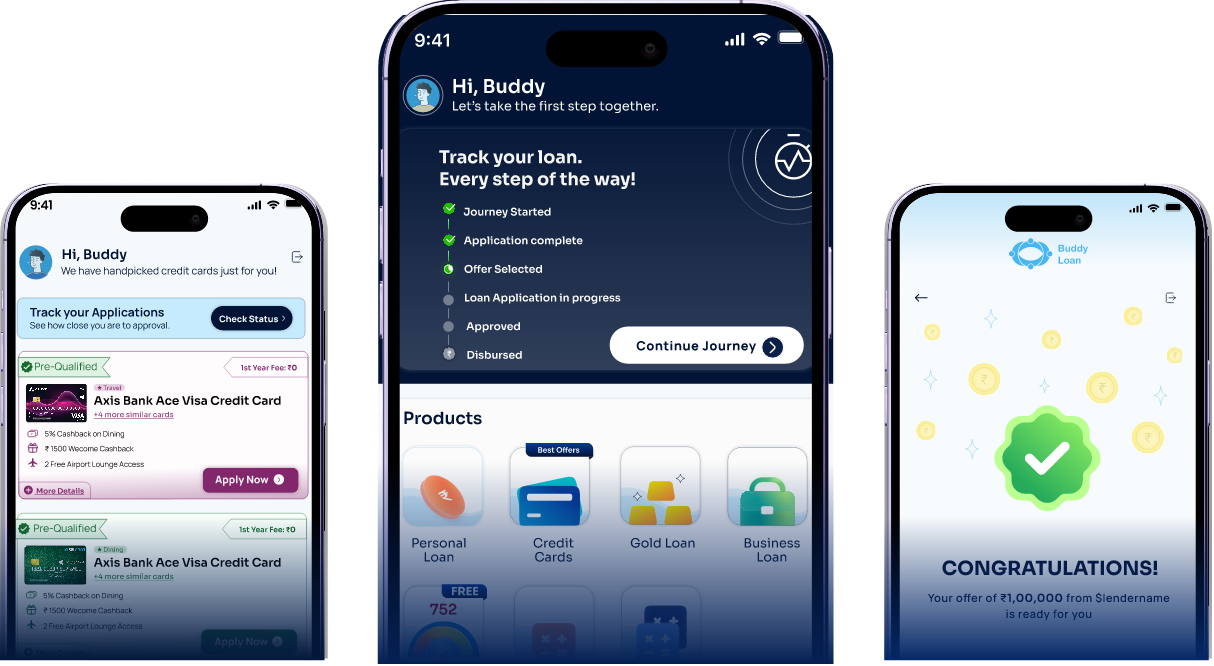
Your Financial Assistant: Buddy Loan
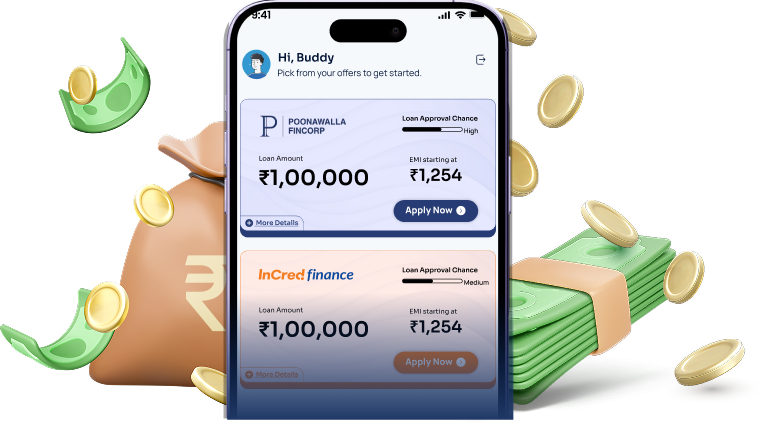
Finding the best bank suited for your needs may be a hassle, as this includes finding out the lowest rates, best loan terms and so on. This process can be reduced with the help of a loan aggregator like the Buddy Loan, which is not a lender itself but a digital lending marketplace.
Here you can:
- Compare your loan options
- Check Your Credit Score for Free
- Calculate the EMI repayment schemes and eligibility.
Conclusion
The world of bank loans is vast and varied, offering a solution for nearly every financial requirement. By understanding the different types of loans, their interest rates, and the offerings of various banks, you can make a well-informed decision that empowers you to achieve your financial goals without undue stress.
Remember to carefully assess your needs, evaluate your repayment capacity, and compare the offerings of multiple lenders before finalising your loan agreement.
A well-researched loan can be a powerful tool for wealth creation and financial well-being.
Download the Buddy Loan App Now!
One solution to each of your financial needs at your fingertip.

Scan to download now