In today’s digital finance, a debit card can be an important key to your financial life. This convenience, however, comes with the critical responsibility of safeguarding it.
A lost, stolen, or compromised card can be a direct line to your bank account for fraudsters. The moment you suspect your card is not safely in your possession or has been compromised, immediate action is an absolute necessity, as a large variety of fraud can be done with your card.
Read on to learn more about why, when, and how to block your debit card and unblock it, ensuring you remain in complete control of your hard-earned money. Understanding these processes is not just about reacting to a crisis; it’s about proactive financial security.


Understanding Debit Cards: Why Blocking is a Crucial First Step
Your debit card offers direct access to your bank account, much more than a credit card. This makes it a primary target for fraudulent activities. Blocking your card is the first and most effective defence against unauthorised transactions.
It’s a temporary measure that can save you from significant financial loss and the stress of recovering stolen funds.
Blocking your debit card might feel like a drastic move, but in many cases, it’s the smartest step you can take to protect your money. Here’s when and why you should act fast:
- Lost or stolen card: If your debit card goes missing, even for a moment, it’s safer to block it immediately to avoid unauthorised use.
- Suspicious activity: Unfamiliar charges, no matter how small, can signal fraud. Blocking your card can stop it from escalating.
- Unusual spending patterns: Some banks automatically block your card if they detect out-of-pattern behaviour, like a sudden overseas transaction.
- Multiple wrong PIN entries: Entering the wrong PIN several times can lead to a temporary block as a built-in security feature.
- Merchant data breaches: If a retailer you’ve used is hacked, your card details could be compromised, even if the card hasn’t left your wallet.
- Impulse control or downtime: Many banks let you lock your card via their app, which is handy for travel, budgeting, or digital detoxes.
With debit card fraud on the rise, knowing when to block your card is practical and essential.
Blocking Your Debit Card
When it comes to blocking your debit card, time is of the essence. Fortunately, banks provide multiple channels to do this quickly and efficiently. These methods can be broadly categorised into online and offline options.
Online Methods to Block a Debit Card
Digital channels are often the fastest way to block your debit card, offering 24/7 accessibility.
Blocking a Debit Card Using Internet Banking
Logging into your net banking portal is a straightforward way to block your card.
Here are the general Steps for blocking a Debit Card via Internet Banking:
- Login: Visit your bank’s internet banking site and log in with your User ID and password.
- Navigate to the Cards Section: Find the ‘e-Services’, ‘Card Services’, or ‘Cards’ tab in the menu.
- Select ‘Block Debit Card’: Look for options like ‘Block ATM Card’, ‘Debit Card Hotlisting’, or ‘Block Card’.
- Choose the Card: Select the specific account and debit card, identified by the first and last four digits.
- Provide a Reason: Choose a reason for blocking (e.g., Lost, Stolen, Damaged).
- Confirm the Request: Review the details, authenticate using an OTP or profile password, and submit.
- Receive Confirmation: An instant confirmation will appear, along with a reference number and a confirmation SMS.
Blocking a Debit Card Using a Mobile Banking App
Similar to internet banking, your bank’s mobile app provides a quick and convenient way to block your card.
Here are the typical steps for blocking a Debit Card via the Mobile Banking App:
- Login to the App: Open your bank’s mobile banking app (e.g., YONO for SBI, iMobile for ICICI) and log in using your MPIN, fingerprint, or face ID.
- Find Card Management: Tap the menu and go to ‘Cards’, ‘Debit Card Services’, or ‘Manage Cards’.
- Select ‘Block Card’ Option: Look for ‘Block/Unblock Card’ or ‘Hotlist Debit Card’.
- Choose the Card and Reason: Select the card you want to block and specify the reason (Lost/Stolen).
- Authenticate: Confirm the request by entering your transaction PIN or an OTP sent to your phone.
- Instant Confirmation: The card is blocked instantly, and you’ll receive confirmation via the app and SMS.
Blocking a Debit Card Using SMS
For those who may not have immediate internet access, SMS banking is a valuable alternative.
Banks have a specific format for sending an SMS to a designated number to block your card. For example, you should text ‘BLOCK’ followed by the last four digits of your card number. You will receive a confirmation SMS once the card is successfully blocked.
Here is a list of the top banks and their codes to block your debit card using the SMS feature:
| Bank Name | SMS Format | Send to Number |
| State Bank of India (SBI) | BLOCK XXXX (XXXX = last 4 digits of card) | 567676 |
| ICICI Bank | (Requires prior registration for SMS alerts) | Varies, often initiated via customer care |
| HDFC Bank | (Typically directs users to call customer care or use NetBanking) | N/A |
| Axis Bank | BLOCK XXXX (XXXX = last 4 digits of card) | 5676782 |
| Punjab National Bank (PNB) | HOT (Account Number) | 9264092640 |
| Bank of Baroda | BLOCK CARD | 9223172141 |
| Canara Bank | CAN (space) HOTLISTDC (space) Card Number | 9289292892 |
| Union Bank of India | UBLOCK (Account Number) | 09223008486 |
| Indian Bank | BLOCKCC | 56767 |
| Kotak Mahindra Bank | DCBLOCK (Last 4 digits of Card No.) | 9971056767 or 5676788 |
4. Debit Card Blocking Using USSD Codes:
Some banks also offer the ability to block your card using USSD (Unstructured Supplementary Service Data) codes, which can be dialled from any mobile phone without needing a smartphone or internet connection.
| Bank Name | USSD Code |
| State Bank of India (SBI) | 9941# |
| ICICI Bank | 9944# |
| HDFC Bank | 9943# |
| Axis Bank | 9945# |
| Punjab National Bank (PNB) | 9942# |
| Bank of Baroda | 9948# |
| Canara Bank | 9946# |
| Union Bank of India | 9952# |
| Indian Bank | 9958# |
| IDBI Bank | 9947# |
5. Debit Card Blocking Using WhatsApp Banking
A growing number of banks are now offering services through WhatsApp. After a one-time registration, you can interact with the bank’s chatbot to access various services, including blocking your debit card.
Here are the general steps for blocking a debit card via WhatsApp banking:
- Save the Number: Save your bank’s official WhatsApp banking number in your phone’s contacts.
- Initiate Chat: Open WhatsApp and send a “Hi” or “Hello” message to the saved number from your registered mobile number.
- Follow the Menu: The bank’s chatbot will reply with a menu of services. Type the number corresponding to ‘Debit Card Services’ or ‘Block Card’.
- Select Card: You may be asked to confirm the last few digits of the card you wish to block.
- Confirm Blocking: Follow the final prompts to confirm the blocking of your card. You will receive an instant confirmation in the chat and via SMS.
| Bank Name | WhatsApp Number |
| State Bank of India (SBI) | +919022690226 |
| ICICI Bank | +918640086400 |
| HDFC Bank | +917070022222 |
| Axis Bank | +917036165000 |
| Punjab National Bank (PNB) | +919264092640 |
| Bank of Baroda | +918433888777 |
| Canara Bank | +919076030001 |
| Union Bank of India | +919666606060 |
| Indian Bank | +918754424242 |
| Kotak Mahindra Bank | +912266006022 |
Offline Methods to Block a Debit Card
If you’re unable to use online methods or prefer a more direct approach, several offline options are available.
Block a Debit Card Using Customer Care Helpline
Every bank has a 24/7 customer care helpline for card-related emergencies. You can find this number on the back of your debit card, on the bank’s website, or in your account statements. When you call, you’ll need to verify your identity by providing personal details like your account number, date of birth, and registered mobile number. The customer care executive will then block your card immediately.
| Bank Name | Customer Care/Card Blocking Number |
| State Bank of India (SBI) | 1800-11-2211, 1800-425-3800, 080-26599990 |
| ICICI Bank | 1800 1080 |
| HDFC Bank | 1800 1600 / 1800 2600 |
| Axis Bank | 1800-103-5577, 1860-419-5555, 1860-500-5555 |
| Punjab National Bank (PNB) | 1800 1800, 1800 2021 |
| Bank of Baroda | 1800 5700 |
| Canara Bank | 1800 1030 |
| Union Bank of India | 1800 22 22 44, 1800 208 2244 |
| Indian Bank | 1800-425-00000 |
| Kotak Mahindra Bank | 1860 266 2666 |
Block a Debit Card By Visiting the Bank Branch
You can always visit your nearest bank branch to request that your debit card be blocked. You will likely need to fill out a form and provide proof of identity. This method is reliable, though it is dependent on banking hours.
Also Read: Debit Card Hotlisting
Unblock Your Debit Card and Regaining Access
The process to unblock a debit card depends on the reason it was blocked in the first place. A temporary block due to incorrect PIN entries often resolves automatically, while a card blocked due to being lost or stolen will likely require a new card to be issued.
Online Methods to Unblock a Debit Card
While less common than online blocking, some banks offer digital options for unblocking.
Internet Banking/Mobile App
A few banks allow you to unblock your card through their net banking portal or mobile app, especially if it was a temporary lock you initiated yourself. You would navigate to the card management section and look for an ‘unblock’ or ‘unlock’ option.
Here are the general steps for unblocking a temporarily locked debit card via Internet Banking:
- Log In: Securely log in to your bank’s internet banking portal using your customer ID and password.
- Navigate to Card Services: Find the main menu and look for a section labeled ‘Cards’, ‘Debit Card Services’, or ‘Service Requests’.
- Find Card Controls: Within this section, locate an option named ‘Manage Debit Card’, ‘Card Controls’, or ‘Block/Unblock Debit Card’.
- Select the Card: Choose the specific debit card that is currently locked. The status will typically be shown as ‘Blocked’ or ‘Locked’.
- Initiate Unblock: Click on the ‘Unblock’ or ‘Unlock’ button or toggle associated with the card.
- Authenticate: For security, you will be required to authenticate this action. This is usually done by entering a One-Time Password (OTP) sent to your registered mobile number or by using your transaction/profile password.
- Confirmation: Upon successful authentication, the card status will be updated to ‘Active’ instantly. You will receive a confirmation on the screen and via an SMS message.
Here are the typical steps for unblocking a temporarily locked Debit Card via Mobile App:
- Open and Log In: Launch your bank’s mobile banking app and log in using your MPIN, biometric authentication (fingerprint/Face ID), or password.
- Go to Card Management: From the main dashboard or menu, tap on the section for ‘Cards’, ‘Debit Cards’, or ‘Manage Cards’.
- Select Your Card: Tap on the image or entry for the specific debit card you wish to unblock.
- Use the Toggle/Button: You will typically see a clear toggle switch or a button labelled ‘Lock/Unlock Card’ or ‘Temporarily Block’. If the card is locked, this switch will be in the ‘off’ or ‘locked’ position.
- Activate the Card: Tap the toggle or button to switch it to the ‘on’ or ‘unlocked’ position.
- Confirm Action: You may be asked to re-enter your MPIN or another security credential to confirm the action.
- Instant Activation: The card will be unblocked immediately, ready for use. The app will display the updated ‘Active’ status, and you’ll likely receive an SMS confirmation.
Note: This is typically not available if the card was permanently blocked for security reasons.
Also Read: Guide to Unblock your Debit Card
SMS Banking
Some banks may also provide an SMS service to unblock your card. Similar to blocking, you would need to send an SMS in a specific format to a designated number.
Here is a list of all tables, including numbers of top 10 banks, their SMS numbers and codes to unblock a debit card.
| Bank Name | SMS Format to Unblock | Send to Number |
| State Bank of India (SBI) | UNBLOCK XXXX (XXXX = last 4 digits of card) | 567676 |
| ICICI Bank | Service not typically offered via SMS. Use iMobile app or call customer care. | N/A |
| HDFC Bank | Service not offered via SMS. Use NetBanking/MobileBanking or call customer care. | N/A |
| Axis Bank | Service not typically offered via SMS. Use the Axis Mobile app. | N/A |
| Punjab National Bank (PNB) | Service not typically offered via SMS. Visit branch or call customer care. | N/A |
| Bank of Baroda | Service not offered via SMS. Use the bob World app or call customer care. | N/A |
| Canara Bank | Service not offered via SMS. Visit branch or call customer care. | N/A |
| Union Bank of India | UBLOCK (Account Number) | 09223008486 |
| Indian Bank | Service not offered via SMS. Visit branch or call customer care. | N/A |
| Kotak Mahindra Bank | DCUNBLOCK (Last 4 digits of Card No.) | 9971056767 or 5676788 |
Please note that, while SMS blocking is enabled by most of the banks, unblocking is still considered less urgent. Hence, you might have to visit a branch or use an online portal to unblock your debit card.
Offline Methods to Unblock a Debit Card
For most situations, especially those involving a security-related block, you will need to use offline methods.
- Automatic Unblocking: If your card was blocked due to entering the wrong PIN three consecutive times, it will usually unblock automatically after 24 hours. This is a security feature to prevent unauthorised access.
- Visiting the Bank Branch: This is the most common and secure way to unblock your debit card. You will need to visit your branch and submit a written application to unblock the card. You must also provide valid identity proof for verification. The bank officials will then process your request and unblock your debit card.
- Customer Care: In some cases, you may be able to unblock your card by calling customer care. You will have to go through a verification process to confirm your identity. However, for security reasons, they may still require you to visit the branch.
Here is a list of customer care numbers of top banks that can assist you in unblocking your cards:
| Bank Name | Customer Care Number for Card Services |
| State Bank of India (SBI) | 1800-11-2211, 1800-425-3800, 080-26599990 |
| ICICI Bank | 1800 1080 |
| HDFC Bank | 1800 1600 / 1800 2600 |
| Axis Bank | 1800-103-5577, 1860-419-5555, 1860-500-5555 |
| Punjab National Bank (PNB) | 1800 1800, 1800 2021 |
| Bank of Baroda | 1800 5700 |
| Canara Bank | 1800 1030 |
| Union Bank of India | 1800 22 22 44, 1800 208 2244 |
| Indian Bank | 1800-425-00000 |
| Kotak Mahindra Bank | 1860 266 2666 |
Also Read: Block SBI Debit Card | Block HDFC Debit Card
Why Your Card Could Be Blocked
It is important to note that if your card was permanently blocked because it was lost, stolen, or compromised, you will not be able to unblock it. In such cases, the bank will issue you a new debit card. Here are more details on your card blocking:
| Reason for Block | Unblocking Method | Typical Timeframe | Key Considerations |
| Incorrect PIN Entry | Automatic Unblock | 24 Hours | No action required from the cardholder. |
| Temporary Lock by User | Mobile/Internet Banking | Instant | The user can typically unlock it themselves. |
| Suspicious Activity | Visit Bank Branch/Customer Care | 1-3 Business Days | Requires identity verification and clarification. |
| Lost or Stolen Card | New Card Reissuance | 5-7 Business Days | The old card is permanently deactivated. |
Conclusion
Your debit card is a powerful financial tool, and with great power comes great responsibility. Knowing the swift and varied methods to block your debit card in an emergency is the cornerstone of responsible card ownership.
From the instant action of a mobile app to a simple SMS, banks have made it easier than ever to protect your funds. Equally important is understanding the path to unblocking your debit card, whether it’s a simple 24-hour wait for a PIN-related issue or a visit to your branch for more serious concerns.
By familiarising yourself with these processes, you transform from a passive user into a proactive guardian of your own finances, ensuring that your money remains safe, secure, and always under your control.
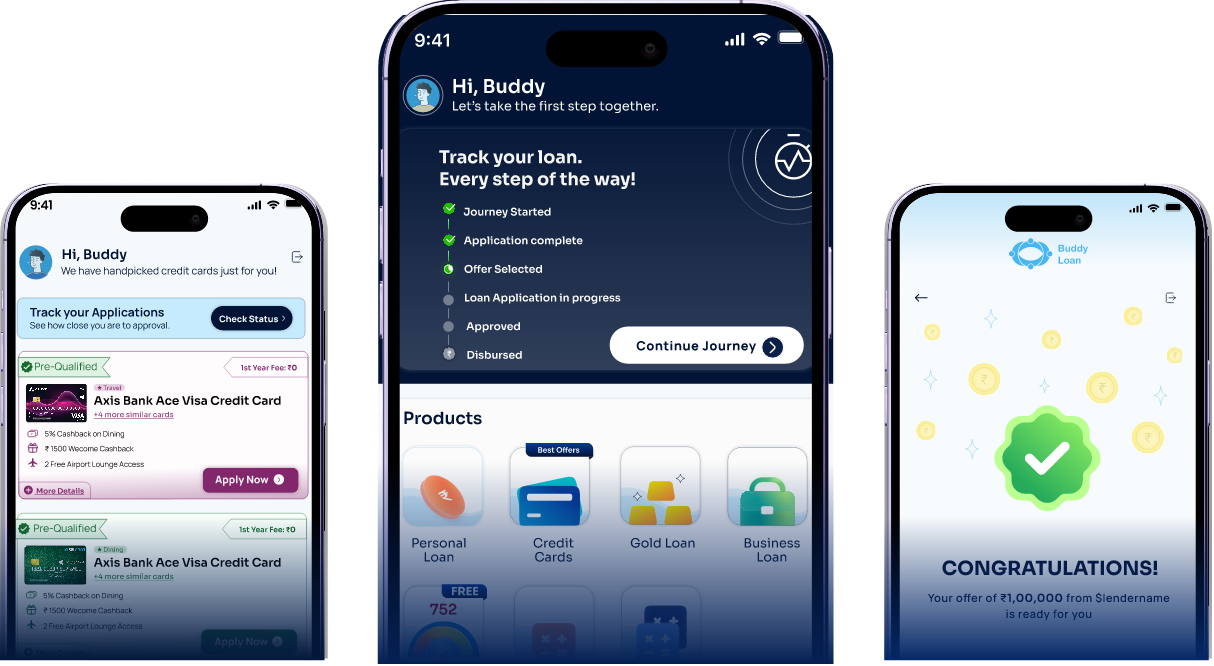
Download the Buddy Loan App Now!
One solution to each of your financial needs at your fingertip.

Scan to download now