



A home loan helps you buy, construct, renovate, or expand a residential property without using your full savings at once. It is a secured property loan where the house or property is used as collateral until repayment is completed. With Buddy Loan, you can start a digital home loan application, compare lender options, and choose an affordable home loan EMI based on your income, property value, tenure, and repayment comfort. Before applying, compare interest rates, processing fees, eligibility, loan tenure, and total repayment cost.

List of Top Banks for Home Loans
Explore our list of top banks and NBFCs to find the best home loan interest rate and select your desired loan amount.
| Lender Name | Interest Rates (p.a.) | Processing Fee (Up to) | Max Loan Amount |
|---|---|---|---|
| Bank of India | 7.10% p.a. onwards | Up to 0.25% | ₹10 Crore |
| Union Bank of India | 7.15% p.a. onwards | Up to 0.50% | ₹15 Crore |
| Bank of Baroda | 7.20% p.a. onwards | Up to 0.50% | ₹20 Crore |
| Punjab National Bank (PNB) | 7.25% p.a. onwards | Up to 0.35% | ₹10 Crore |
| SBI | 7.25% p.a. onwards | Up to 0.35% | ₹10 Crore |
| Canara Bank | 7.40% p.a. onwards | Up to 0.50% | ₹10 Crore |
| ICICI Bank | 7.55% p.a. onwards | Up to 0.50% | ₹10 Crore |
| Kotak Mahindra Bank | 7.60% p.a. onwards | Up to 2% | ₹10 Crore |
| HDFC Bank | 7.75% p.a. onwards | Up to 0.50% | ₹10 Crore |
| Axis Bank | 8.00% p.a. onwards | Up to 1% | ₹10 Crore |
Note- The interest rates mentioned are subject to change. Do visit the website for more information.
List of Top NBFCs & HFCs for Home Loans
Compare to choose your housing loan from the below list of top NBFCs & HFCs and choose among the best interest rates.
| Entity Name | Interest Rates (p.a.) |
|---|---|
| LIC Housing Finance | 7.15% p.a. onwards |
| PNB Housing Finance | 7.50% p.a. onwards |
| Bajaj Finserv | 7.70% p.a. onwards |
| Tata Capital | 8.00% p.a. onwards |
| Jio Financial Services (Jio Finance) | 8.50% p.a. onwards |
| L&T Finance (Housing) | 8.60% p.a. onwards |
| Aditya Birla Housing Finance | 8.60% p.a. onwards |
| IIFL Home Finance | 8.70% p.a. onwards |
| Shriram Housing Finance | 8.90% p.a. onwards |
| Piramal Capital & Housing Finance | 9.00% p.a. onwards |
| HDB Financial Services | 9.00% p.a. onwards |
| Poonawalla Fincorp (Grihum Housing) | 9.00% p.a. onwards |
| Hero Housing Finance | 9.25% p.a. onwards |
| Muthoot Homefin (Muthoot Finance) | 9.75% p.a. onwards |
| Mahindra Rural Housing Finance | 9.75% p.a. onwards |
Note- The interest rates mentioned are subject to change. Do visit the website for more information.
Home Loan EMI Calculator
A Home Loan EMI Calculator helps you estimate your monthly EMI before applying. It uses the loan amount, interest rate, and tenure to show the EMI, total interest, and total repayment amount.
Using a housing loan EMI calculator is simple. Just input details such as the loan amount, loan period, interest rate, and processing fee, and the calculator will compute your monthly EMI.
Home Loan Processing Fees & Charges
Home Loan charges include more than just interest. Check processing fees, prepayment rules, legal charges, technical valuation fees, bounce charges, and overdue penalties before accepting the final offer.
| Charge Type | Indicative Range |
| Processing Fee | Usually, 0.5% to 2% of the loan amount; some lenders may charge higher |
| Foreclosure or Prepayment Charges | Nil for many floating-rate individual loans; fixed-rate loans may have charges |
| EMI Bounce Charges | Around ₹400 to ₹1,000 or more, depending on the lender and the loan amount |
| Penal or Late Payment Charges | Usually charged on the overdue EMI amount |
| Legal and Technical Charges | Actual cost as per property verification |
| Conversion or Rate Switch Fee | May apply when switching from fixed to floating or changing rate package |
| Stamp Duty and Documentation Charges | As per state rules and lender policy |
| Overdue Charges on EMI | Late payment charges are 2% per month of the unpaid EMI amount. |
Home Loan Eligibility Criteria
Home loan eligibility differs by lender, loan amount, property value, and borrower profile. Most lenders check age, income, employment stability, credit score, existing EMIs, and property documents before approving a loan.
- Nationality: Indian residents, NRIs, and PIOs may be eligible.
- Age: Usually 18 to 70 years, depending on the lender and tenure.
- Employment Type: Salaried, self-employed professionals, and self-employed business owners can apply.
- Work Experience: Salaried applicants may need around 2 years of work experience.
- Business Continuity: Self-employed applicants may need around 3 years of business continuity.
- Credit Score: A credit score of 750 or above can help secure better rates.
- Monthly Income: The minimum monthly income may start at around ₹25,000, depending on the lender.
- Property Type: The property should have a clear legal title and approved construction status.
- Repayment Capacity: Existing EMIs should be manageable within income limits.
Documents Needed to Apply for a Home Loan
Keep the required documents ready before starting a digital home loan application. Documents may vary by lender, employment type, property type, and loan amount.
- Identity Proof: PAN card, Aadhaar card, voter ID, driving licence, or passport.
- Address Proof: Aadhaar card, passport, utility bill, water bill, telephone bill, or driving licence.
- Income Proof for Salaried Applicants: Salary slips, Form 16, ITR, and bank statements.
- Income Proof for Self-Employed Applicants: ITR, audited balance sheet, profit and loss statement, business licence, and business address proof.
- Bank Statements: Last 6 months’ bank account statements.
- Employment Proof: Employer ID card or employment confirmation, if required.
- Existing Loan Details: Loan account statement for the previous 12 months, if applicable.
- Property Documents: Sale deed, allotment letter, builder-buyer agreement, approved plan, title documents, or construction estimate.
Home Loan Features & Benefits
Explore the features and benefits of a Home Loan designed to make homeownership more accessible.
Fast Approval
Quick processing to help you secure your dream home.
Competitive Interest Rates
Lower rates to make repayment easier.
100% Digital Process
Apply and track your loan online.
Minimal Documentation
Simple and quick application process.
Flexible Repayment Tenure
Choose a tenure that suits your budget.
Safe & Secure Process
Reliable and secure loan processing.
Home Loan vs Housing Finance Loans
Banks and housing finance companies both offer property financing, but their approval style, pricing method, and eligibility flexibility may differ.
| Feature | Bank Home Loan | Housing Finance Loan from NBFC/HFC |
| Regulatory Framework | Banks follow RBI regulations and external benchmark-linked lending rules | HFCs/NBFCs follow NHB/RBI-linked regulatory requirements |
| Interest Rate | Often more competitive, especially with public-sector banks | May be slightly higher, depending on risk profile |
| Eligibility | Usually, stricter income and document checks | May offer more flexible eligibility |
| Processing Speed | May take longer due to bank checks | Often faster and more flexible |
| Best For | Borrowers with strong credit, stable income, and clear documents | Borrowers with varied income profiles or faster processing needs |
| Rate Movement | EBLR-linked rates may reflect repo rate changes faster | Internal benchmark changes may take longer to reflect |
Types of Housing Loans
Lenders offer a diverse range of home financing solutions tailored to meet specific borrower needs, whether you are buying a new apartment, building on your own land, or upgrading your current living space.
- Home Purchase Loan: This is the most common type of loan, used for purchasing residential properties such as new or pre-owned flats, row houses, and bungalows. Banks typically offer up to 90% of the property’s market value as a loan.
- Home Construction Loan: Designed for individuals who already own a piece of land and require funds to construct a new house or complete an unfinished structure.
- Plot Loan: This loan is specifically for the purchase of residential land or plots for future construction or investment purposes.
- Home Renovation Loan: These loans are ideal for homeowners who wish to repair, refurnish, or renovate their existing property to improve its value and comfort.
- Home Extension Loan: If you need to add more space to your current home, such as an additional room or floor, this loan provides the necessary financing.
- NRI Home Loan: Specially curated for Non-Resident Indians (NRIs) who want to purchase, construct, or renovate a property in India, often offering tenures up to 30 years.
- Home Loan Balance Transfer: This facility allows you to transfer your outstanding loan amount from one lender to another to benefit from a lower interest rate or better repayment terms.
- Bridge Loan: A short-term financing option (usually up to 2 years) for individuals who want to buy a new property before they have sold their existing one.
- Top-up Home Loan: Many lenders allow existing borrowers to avail of additional funds on top of their current home loan to meet various personal or professional financial requirements.
- Home Loan for Women: To encourage homeownership among women, many banks and NBFCs offer concessional interest rates and special schemes for women applicants or co-applicants.
Steps to Apply for a Home Loan
You can apply for a home loan online by submitting your personal, income, and property details, followed by document verification, sanction, property evaluation, and disbursement.
- Fill the Application Form: Enter your personal, employment, income, and property details.
- Verify Mobile Number: Complete OTP verification if applying online.
- Submit Documents: Upload identity proof, address proof, income proof, bank statements, and property documents.
- Credit and Income Verification: The lender checks your credit score, repayment capacity, and existing obligations.
- Property Evaluation: The lender conducts legal and technical checks on the property.
- Loan Sanction: If approved, you receive a sanction letter with the amount, interest rate, tenure, EMI, and charges.
- Agreement and Disbursement: After signing the agreement, funds are disbursed to the seller, builder, or, as per lender rules.
Steps to Apply for a Personal Loan for Home Renovation
If you need funds for repair, painting, furnishing, interiors, or home upgrades, you can apply for a personal loan for home renovation through Buddy Loan’s online flow.
- Visit Buddy Loan or download the Buddy Loan app.
- Open the loan application page.
- Enter your mobile number and verify the OTP.
- Specify the required loan amount and personal email ID.
- Choose the Personal Loan option.
- Select employment type, such as salaried or self-employed.
- Enter work details, including company name, years of service, and designation.
- Add personal details such as full name, PAN, address, date of birth, and gender.
- Provide communication address and income details.
- Click on submit to complete the application.
Home Loan Tax Benefits
A home loan is not only a primary tool for property financing but also serves as a highly effective tax-saving instrument under the Indian Income Tax Act, allowing you to maximise your savings while building a long-term asset.
- Section 24(b) – Deduction on Interest Paid: You can claim a tax deduction on the interest paid for a loan used for the purchase, construction, renovation, or repair of a residential property. For self-occupied properties, the maximum deduction allowed is generally ₹2 lakh per financial year.
- Section 80C – Deduction on Principal Repayment: The repayment of the principal component of your mortgage loan is eligible for a deduction of up to ₹1.5 lakh annually. This benefit also covers associated costs like stamp duty and registration fees, provided they are claimed in the year they are paid.
- Section 80EE – Benefit for First-Time Homebuyers: First-time buyers may be eligible for an additional deduction of up to ₹50,000 on interest payments. This is over and above the limits specified under Section 24(b) and Section 80C.
- Section 80EEA – Affordable Housing Benefit: For individuals who took a loan for affordable housing projects on or after April 1, 2019, an additional deduction of up to ₹1.5 lakh can be claimed on interest. This is specifically designed to support affordable housing finance initiatives.
- Joint Home Loan Tax Benefits: When you take a secured property loan jointly with a co-owner, such as a spouse, both individuals can claim separate deductions for interest and principal in proportion to their ownership share.
- Pre-construction Interest Deduction: Interest paid during the period before construction is completed can be claimed in five equal annual installments. This deduction starts from the financial year in which the construction of the property is finished.
Factors Affecting Home Loan Interest Rates
Several internal and external variables determine the final rate you pay on your home loan, influencing both your monthly EMI and the overall cost of your property financing.
- RBI Repo Rate: As the benchmark rate at which the Reserve Bank of India lends to banks, any change here directly impacts floating-type loans; typically, a cut in the repo rate leads to a low-interest home loan.
- Credit Score (CIBIL Score): Lenders use your credit score to gauge risk; a score of 750 or above is generally required to qualify for the best housing loan rates.
- Loan-to-Value (LTV) Ratio: This represents the proportion of the property value financed by the lender. A lower LTV ratio (achieved through a higher down payment) reduces the lender’s risk and can result in lower interest rates.
- Income and Job Stability: Borrowers with a steady income from reputed organizations or the government sector are viewed as lower risk and often receive better home financing solutions.
- Employment Type: Lenders may charge slightly higher rates for self-employed individuals compared to salaried employees due to the perceived risk of unstable income patterns.
- Loan Amount and Tenure: Larger loan amounts or exceptionally long tenures (up to 30–32 years) may increase the lender’s risk exposure, potentially leading to a higher interest rate.
- Property Location and Builder Profile: The property’s age, location, and the reputation of the builder play a role; well-located projects by trusted developers often attract lower rates because they are easier to resell.
- Type of Interest Rate: Choosing between fixed and floating interest loan structures affects your rate; floating rates are typically lower initially but change with market benchmarks, while fixed rates remain constant for a set period.
- Gender of the Applicant: Many financial institutions offer a concession of 0.05% to 0.1% for loans where a woman is the primary or co-applicant.
- Inflation and Market Competition: Higher inflation usually pushes interest rates upward, while intense competition among banks and NBFCs can drive lenders to offer more affordable housing finance to attract borrowers.
Tips Before Applying for a Home Loan
Before you apply for a home loan online, it is essential to prepare your financial profile to ensure you secure the most affordable home loan EMI and the best housing loan rates.
- Improve Your Credit Score: Aim for a credit score of 750 or above by clearing existing dues on time. A high score signals lower risk to lenders and helps you qualify for the lowest interest home loan offers.
- Research and Compare Lenders: Do not settle for the first offer; instead, compare interest rates, loan terms, and processing fees across various banks and NBFCs to find the most affordable housing finance solution.
- Assess Your Affordability: Use a home loan EMI calculator to understand your monthly budget and ensure that your total EMIs do not exceed 50-60% of your take-home pay.
- Save for a Higher Down Payment: Contributing a larger portion upfront, ideally 20% or more, reduces the loan-to-value (LTV) ratio, which can help you secure more favorable interest rates and lower your total interest outgo.
- Maintain Employment Stability: Lenders prefer applicants with a stable income and a consistent employment history; avoid switching jobs frequently just before or during the digital home loan application process.
- Account for Additional Expenses: Beyond the principal and interest, factor in secondary costs such as processing fees, legal charges, technical evaluation fees, and stamp duty to avoid unexpected financial pressure.
- Avoid Multiple Simultaneous Applications: Applying with multiple lenders at once can lead to several “hard inquiries” on your credit report, which may negatively impact your credit score.
- Clear Existing Debts: Reducing high-cost debts like credit cards or personal loans improves your debt-to-income ratio, increasing your home loan eligibility and borrowing power.
- Consider a Joint Home Loan: Adding a co-applicant with a stable income can enhance your eligibility. Furthermore, adding a female co-applicant may qualify you for a special interest rate concession, often ranging from 0.05% to 0.25%.
- Read the Loan Agreement Carefully: Before signing, ensure you understand all terms and conditions, including the difference between fixed and floating interest loan structures and any potential hidden charges.
Home Loan Balance Transfer
A balance transfer home loan is a strategic financial tool that allows you to move your outstanding debt from one lender to another to take advantage of more favorable terms and reduce your overall interest burden.
- Secure Lower Interest Rates: The primary motivation for a housing loan balance transfer is to lock in the lowest interest home loan rates available, which significantly reduces the total cost of borrowing over the remaining tenure.
- Achieve Affordable EMIs: By switching to a lender with more competitive rates or negotiating for an adjusted tenure, you can secure a more affordable home loan EMI, helping you manage your monthly household budget with ease.
- Access Top-up Loan Facilities: Most lenders offer the option of a top-up loan during the transfer process, providing you with additional funds for needs like home renovation at attractive interest rates.
- Strategic Timing for Savings: A balance transfer is most beneficial when performed during the early stages of the loan tenure, when the interest outgo is at its peak, and when the rate difference between lenders is approximately 0.75% to 1%.
- Enhanced Loan Features: Beyond just rates, transferring your loan can provide access to better service terms, such as flexible repayment options or more efficient digital home loan application and management tools.
- Evaluate Costs vs. Savings: Since a balance transfer is treated as a new loan, it is essential to ensure that the long-term interest savings outweigh the associated processing fees and administrative charges of the new lender.
Home Loan Repayment
Managing your home loan repayment effectively is essential for fulfilling your financial obligations while minimizing the total interest burden on your long-term property loan.
- Regular EMIs: Repayments are generally made through Equated Monthly Installments (EMIs), which include both the principal and interest components, typically paid over a tenure of up to 30 years.
- Pre-payment Facility: You can make a lump-sum payment towards the principal amount before the scheduled date, which directly reduces the outstanding balance and the total interest payable over time.
- Part-payment Option: This involves making partial repayments towards the principal amount, helping you shorten the loan tenure and lower your overall interest costs.
- Increase EMI Amount: If your income increases, choosing to increase your EMI amount can help you clear the debt faster and save significantly on interest.
- Choose a Shorter Tenure: While a shorter tenure results in higher monthly payments, it drastically reduces the overall cost of the loan because interest accumulates for a shorter period.
- Utilize Windfalls: Apply annual bonuses, tax refunds, or other financial windfalls toward additional principal payments to expedite your journey toward homeownership.
- Track Amortization: Use a home loan EMI calculator to view an amortization table, which provides a detailed month-on-month break-up of your repayment schedule and remaining balance.
- Negotiate for Lower Rates: Borrowers with a clean repayment history and a high credit score may be able to request a lower interest rate from their lender, leading to a more affordable home loan EMI.
Steps to Apply for a Loan with Buddy Loan
Here’s the step-by-step process that you can follow to apply for a housing loan on Buddy Loan:
- Step 1: Visit buddyloan.com or Download & install the Buddy Loan app (Android or iOS).
- Step 2: Open the Loan Application Page. Provide the mobile number and enter the received OTP.
- Step 3: Specify the desired loan amount & personal email. Next, choose the Personal Loan option
- Step 4: Choose the employment type (Salaried, Self-Employed, or Student) and the salary mode (bank or cash).
- Step 5: Enter your work details (Including company name, years of service and Designation)
- Step 6: Enter your personal details (Including Full Name, PAN, address DOB & Gender)
- Step 7: Provide your communication address, and income details and Click the ‘Submit’ button.

Do’s and Don’ts of Getting a Housing Loan
To increase your chances of housing loan approval and enhance your eligibility for a preapproved loan, it is important to follow certain guidelines. Here are some essential do’s and don’ts to improve your chances of getting a housing loan:
| Do’s | Don’ts |
|---|---|
| Maintain a good credit score | Avoid the delay of loan payments |
| Save for a down payment | Avoid applying for multiple loans simultaneously |
| Maintain a stable employment history | Avoid switching jobs frequently |
| Reduce existing debt | Avoid taking additional debt |
| Organize required financial documents | Do not provide false information |
Tips to Avoid Home Loan Application Rejection
If your home loan application gets rejected, it can be disheartening. However, there are steps you can take to address the situation and increase your chances of future approval. Here are some important actions to consider:
- Check Your Credit Score: Obtain a free CIBIL score or credit report to understand your creditworthiness and identify any issues that may have led to the rejection.
- Work on Credit Improvement: If your credit score is low, focus on improving it by paying bills and existing debts on time, reducing outstanding balances, and avoiding new credit inquiries.
- Reassess Your Financial Situation: Evaluate your financial standing and consider whether it’s necessary to enhance your income or decrease your existing debts.
- Address Documentation Requirements: Review the home loan documents list provided by the lender and ensure that you have submitted all the necessary documents accurately.
- Seek Professional Guidance: Consult with a reputable mortgage broker or financial advisor who can provide insights and guidance on improving your loan eligibility.
- Consider getting a joint home loan: Opting for a joint home loan can increase your chances of loan approval. By including a co-applicant with a stable income, you can combine your earnings and improve overall loan eligibility.
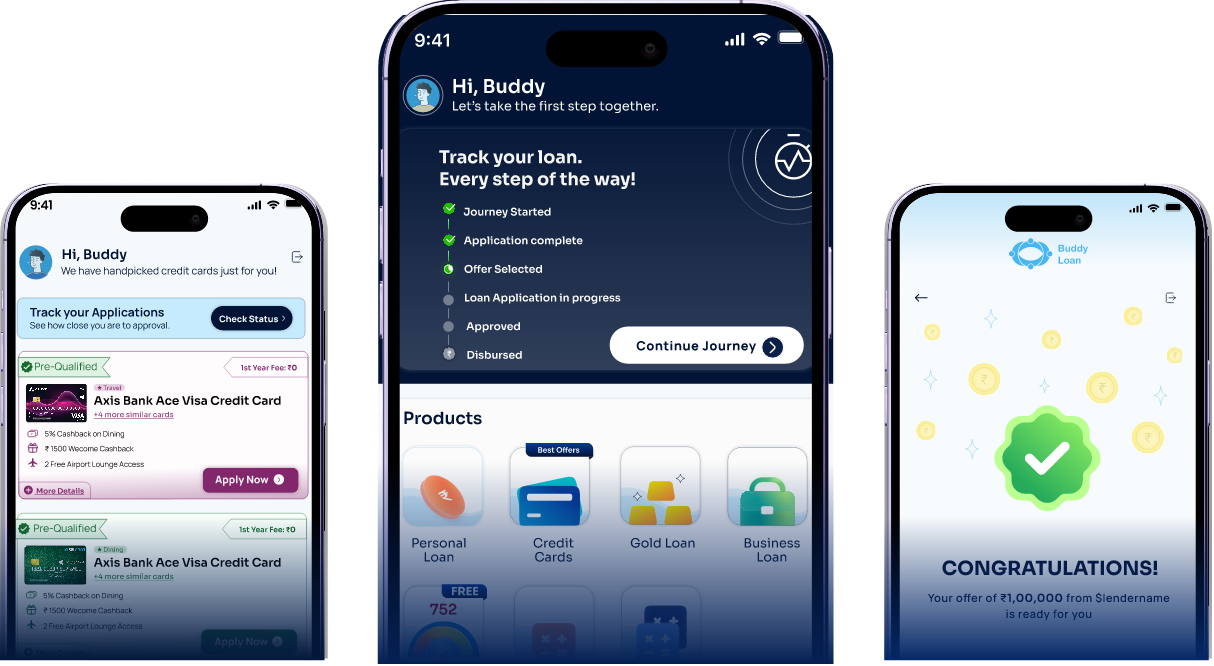
Download the Buddy Loan App Now!
One solution to each of your financial needs at your fingertip.

Scan to download now